- Awareness of Fluorescent Lamp Manufacturing and Import/Export Ban
- Actions After Learning of the Manufacturing and Import/Export Ban
- Intent to Continue Using Fluorescent Lamps
- About “Replacement LED Lamps”
- Risks of Improper Lamp Selection
- Awareness of Fixture Lifespan and Fire Risk
- Recommendations from Lighting Professionals
- Recommended LED Ceiling Lights
- Conclusion
Awareness of Fluorescent Lamp Manufacturing and Import/Export Ban
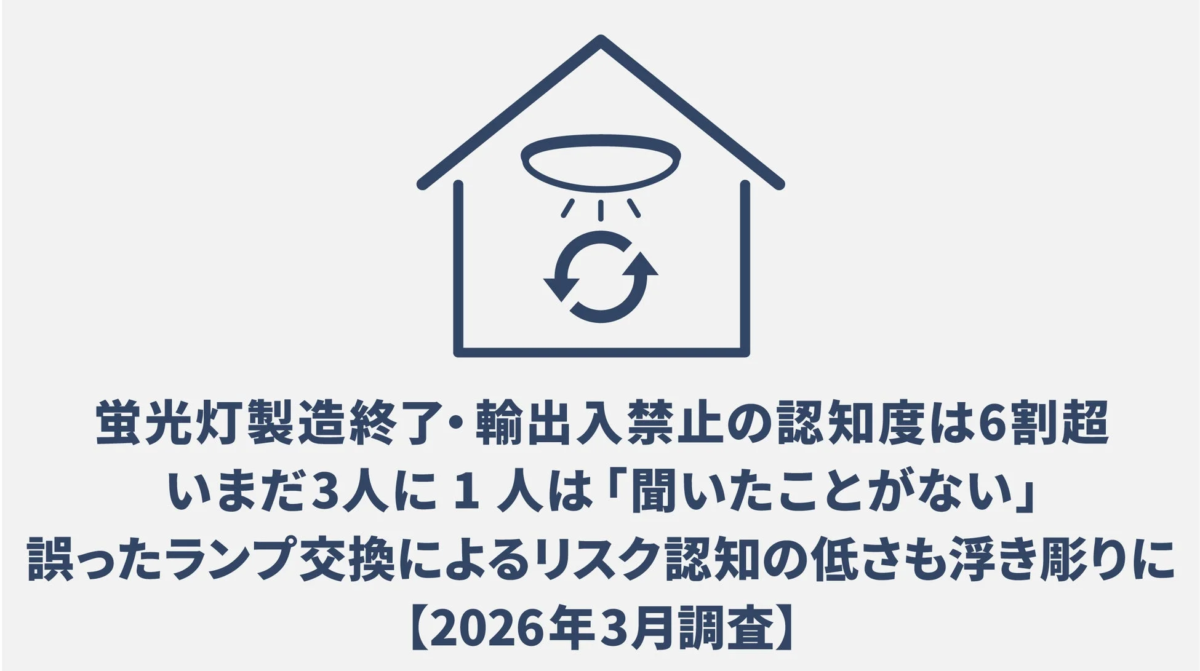
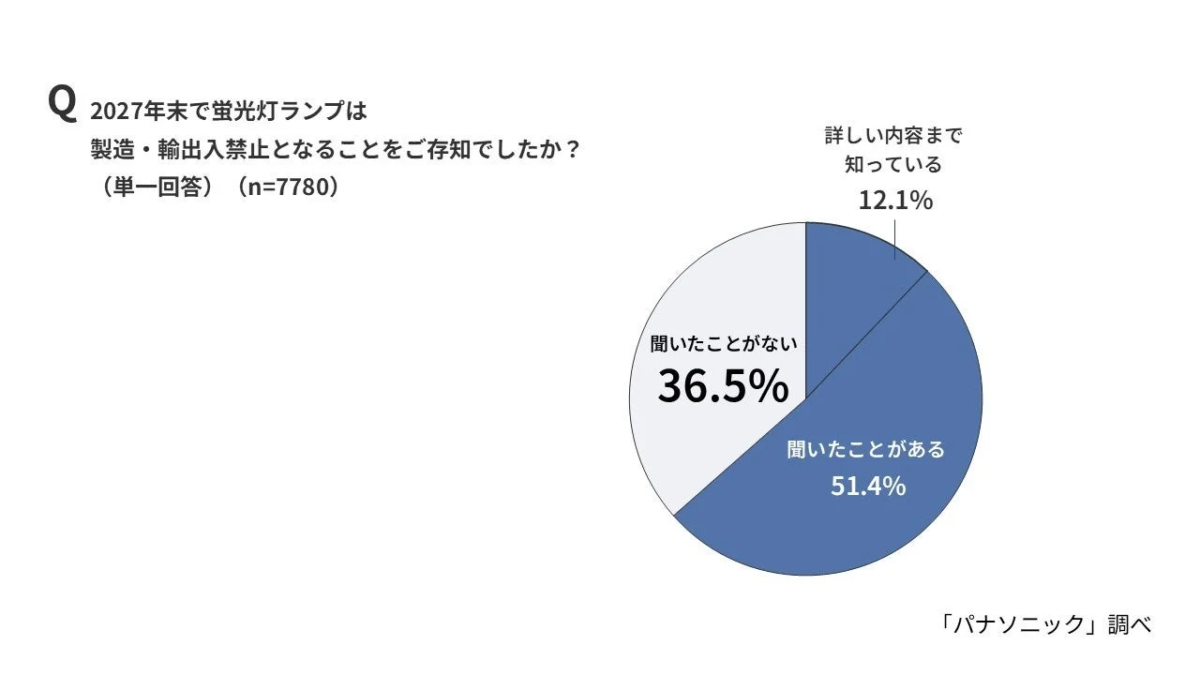
The awareness rate of the prohibition of fluorescent lamp manufacturing and import/export by the end of 2027 has slightly increased from 57.2% in the previous survey to 63.5%. However, approximately one in three individuals still report having “never heard of it.” Specifically, 12.1% are aware of the detailed content, 51.4% have heard of it, and 36.5% are completely unaware.
Actions After Learning of the Manufacturing and Import/Export Ban
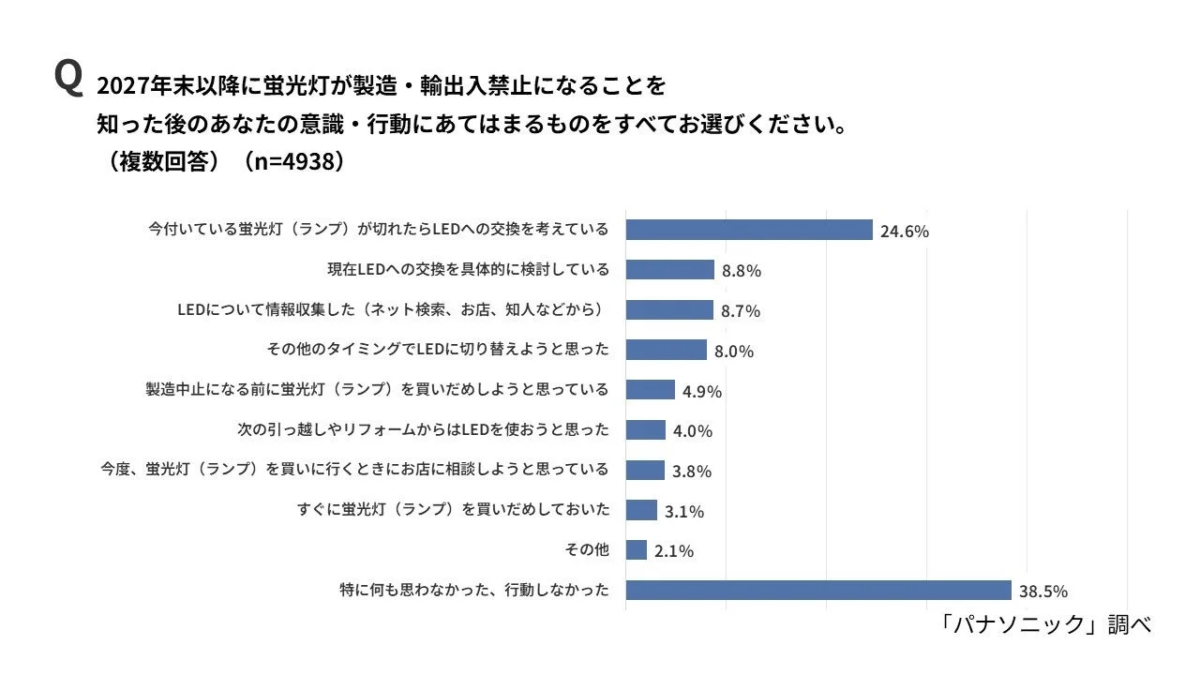
Regarding actions taken after learning about the ban, only 8.8% of respondents indicated they are “currently concretely considering switching to LED.” A significant 38.5% responded, “did not think or act specifically,” while 24.6% stated they are “considering switching to LED once the current fluorescent lamp (bulb) burns out.” This highlights a prevalence of “passive replacement” intentions, with many individuals not yet taking concrete steps despite the approaching deadline.
Intent to Continue Using Fluorescent Lamps
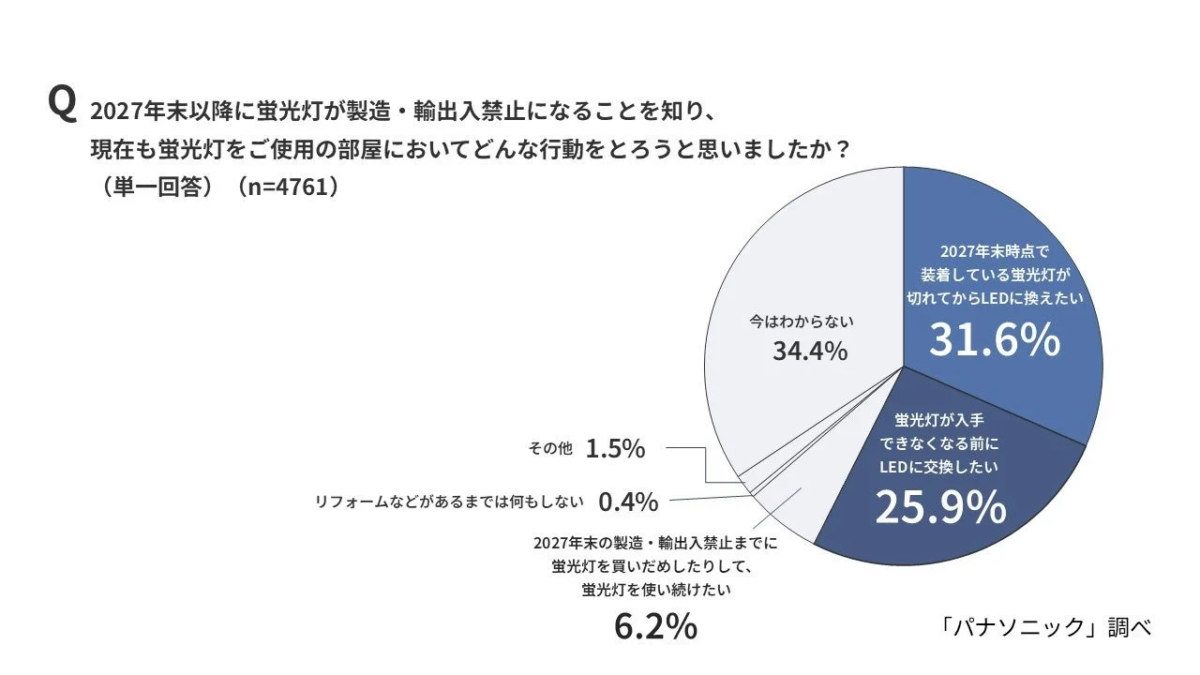
While over half of the respondents expressed an intention to switch to LED lighting, a segment still wishes to continue using fluorescent lamps. Among those currently using fluorescent lamps, 31.6% prefer to replace them with LEDs only after the current lamp burns out by the end of 2027, and 25.9% wish to replace them before fluorescent lamps become unavailable. The survey also found that 6.2% intend to stock up on fluorescent lamps and continue using them, a decrease from 9.7% in the previous survey but still a notable number.
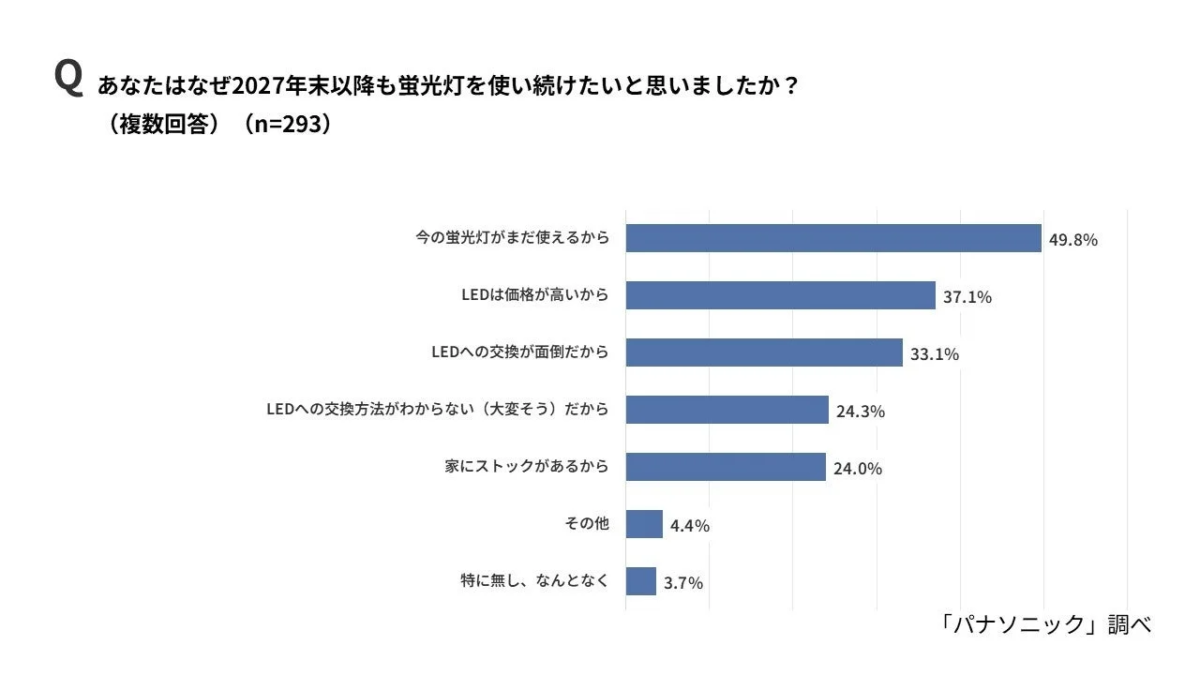
The primary reasons for wanting to continue using fluorescent lamps include “the current fluorescent lamp is still usable” (49.8%), “LEDs are expensive” (37.1%), and “replacement is troublesome” (33.1%). These factors indicate that psychological and economic considerations are inhibiting the transition to LED.
About “Replacement LED Lamps”
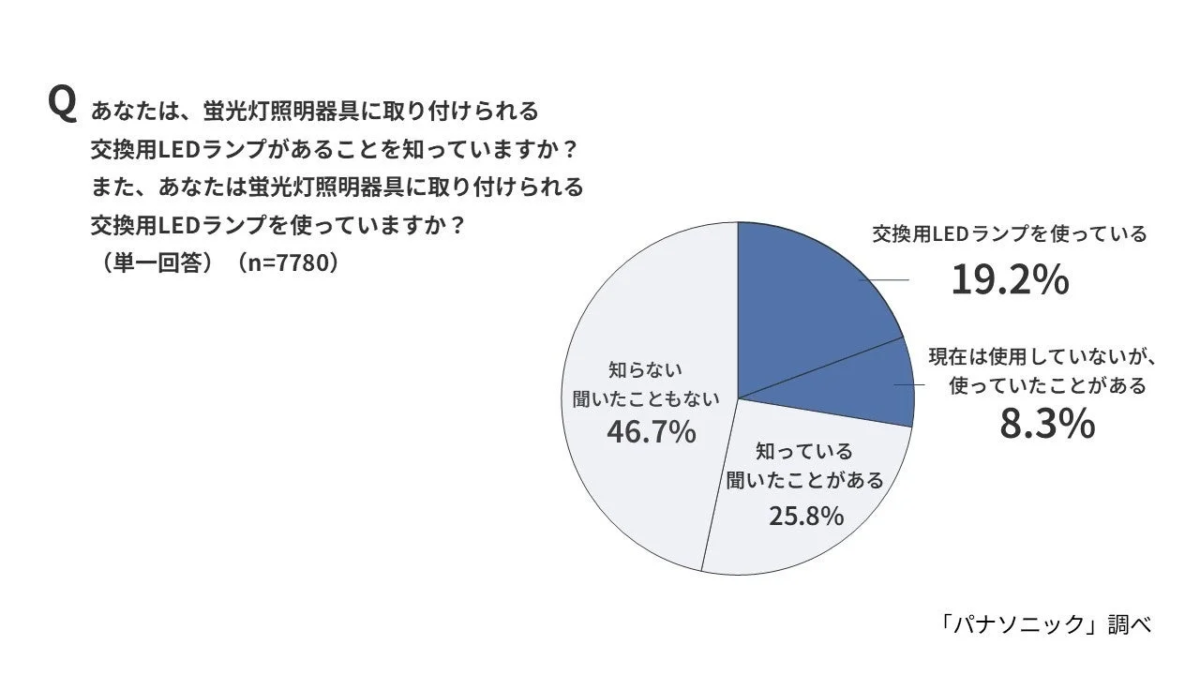
Approximately three out of ten people have experience using “replacement LED lamps” that can be installed directly into existing fluorescent lighting fixtures. Specifically, 19.2% are currently using them, and 8.3% have used them in the past, totaling 27.5%. However, 46.7% of respondents reported being “unaware or having never heard of” such lamps.
Risks of Improper Lamp Selection
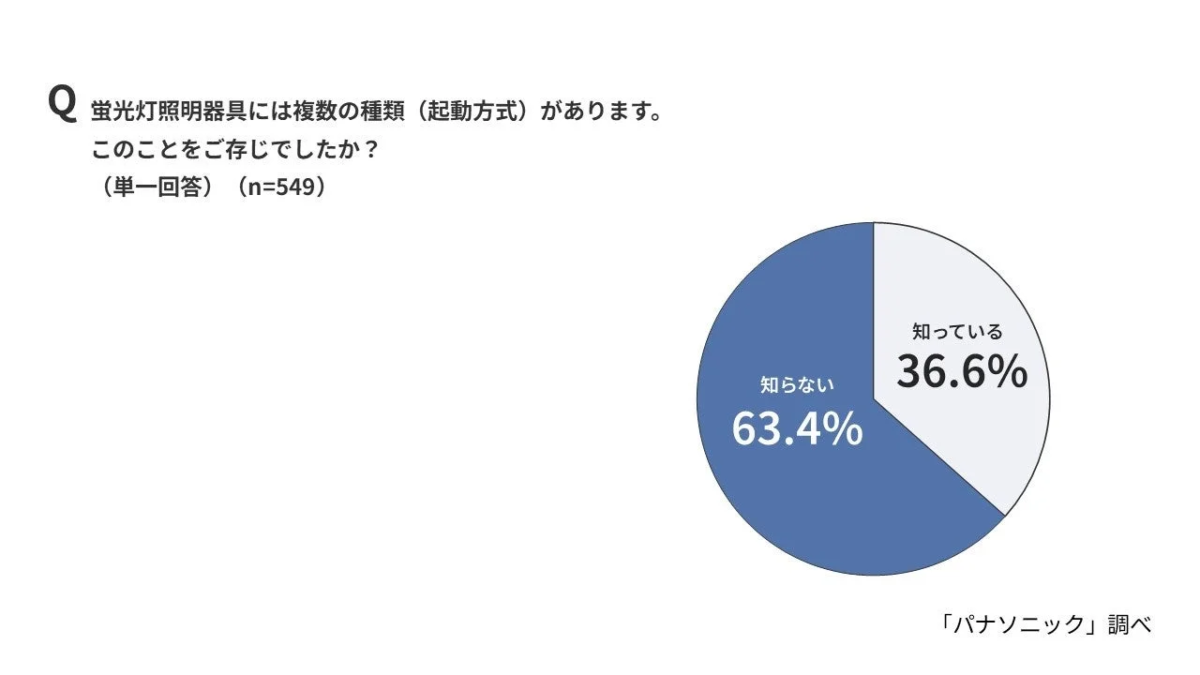
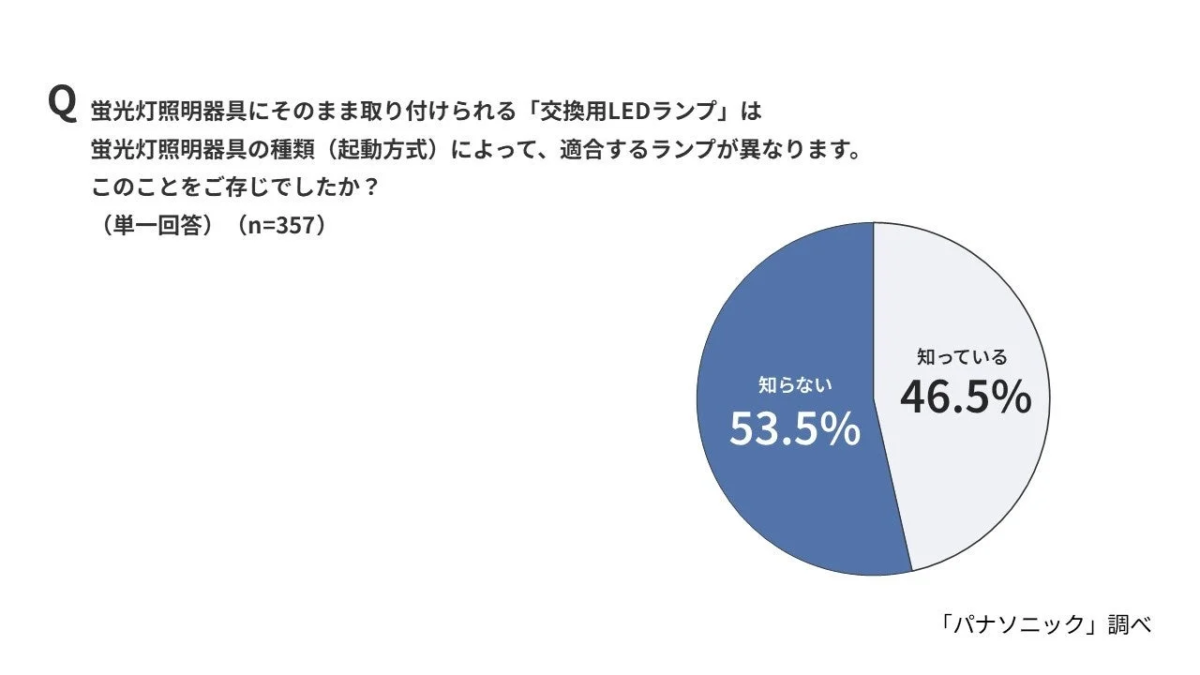
Despite the apparent ease of replacing only the lamp with an LED, improper selection carries significant risks. A substantial 63.4% of respondents are unaware that fluorescent lighting fixtures come in multiple types (starting methods). Furthermore, 53.5% are unaware that the suitable replacement LED lamp varies depending on the fixture’s starting method.
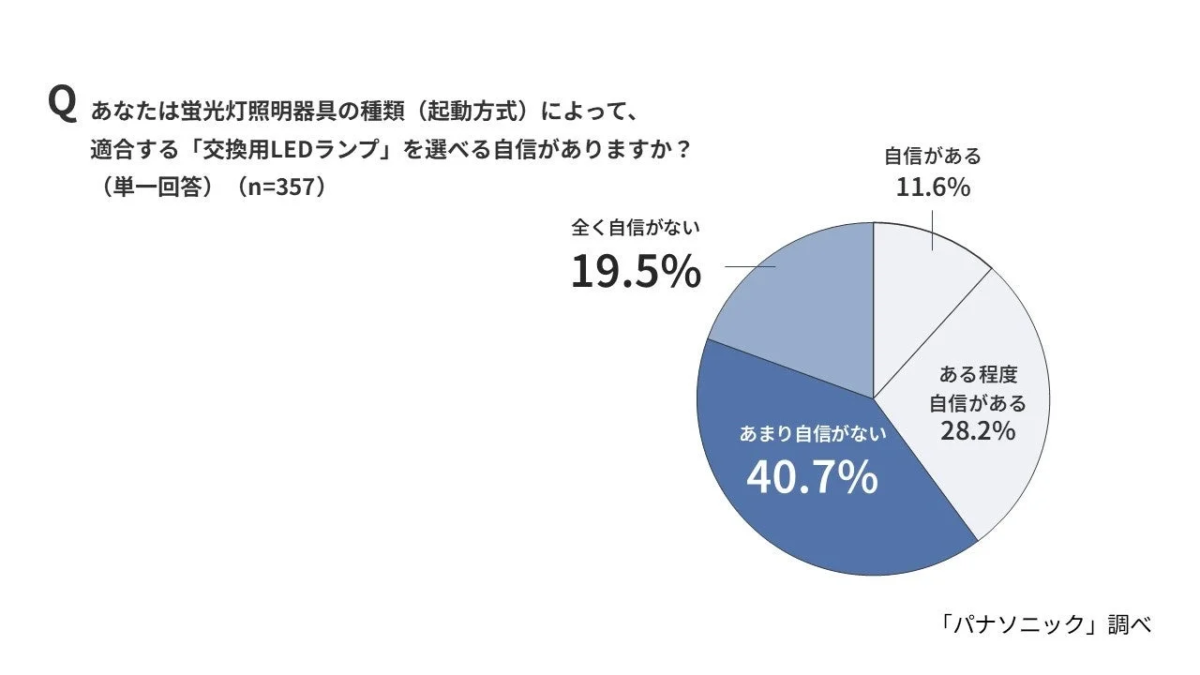
Consequently, 60.2% of individuals responded that they have “little confidence” (40.7%) or “no confidence at all” (19.5%) in correctly selecting a suitable replacement LED lamp for their fluorescent fixture. Using an incompatible lamp can not only lead to improper lighting but also, in severe cases, cause serious accidents such as smoke or fire. This highlights how the difficulty consumers face in choosing lamps directly impacts safety risks.
Awareness of Fixture Lifespan and Fire Risk
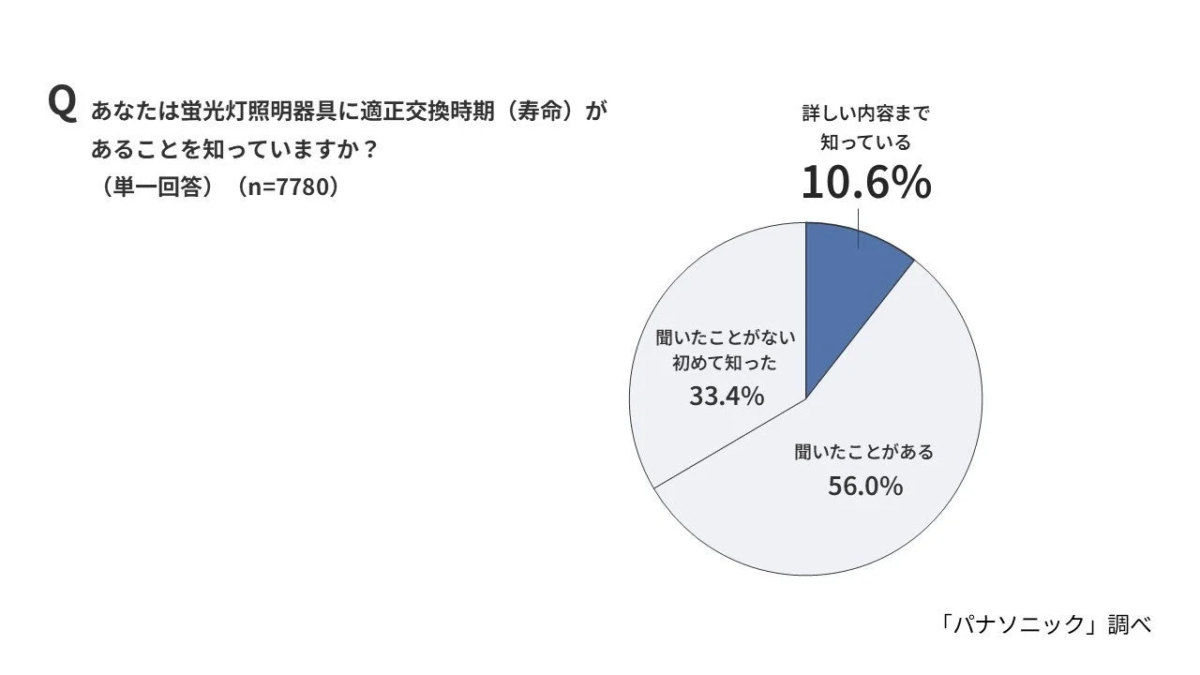
When asked about the appropriate replacement period (lifespan) for fluorescent lighting fixtures, one in three respondents stated they had “never heard of it or learned it for the first time.” Only 10.6% claimed to know the detailed content, a slight increase from 9.5% in the previous survey, indicating that the lifespan of fluorescent lighting fixtures is still not widely recognized.
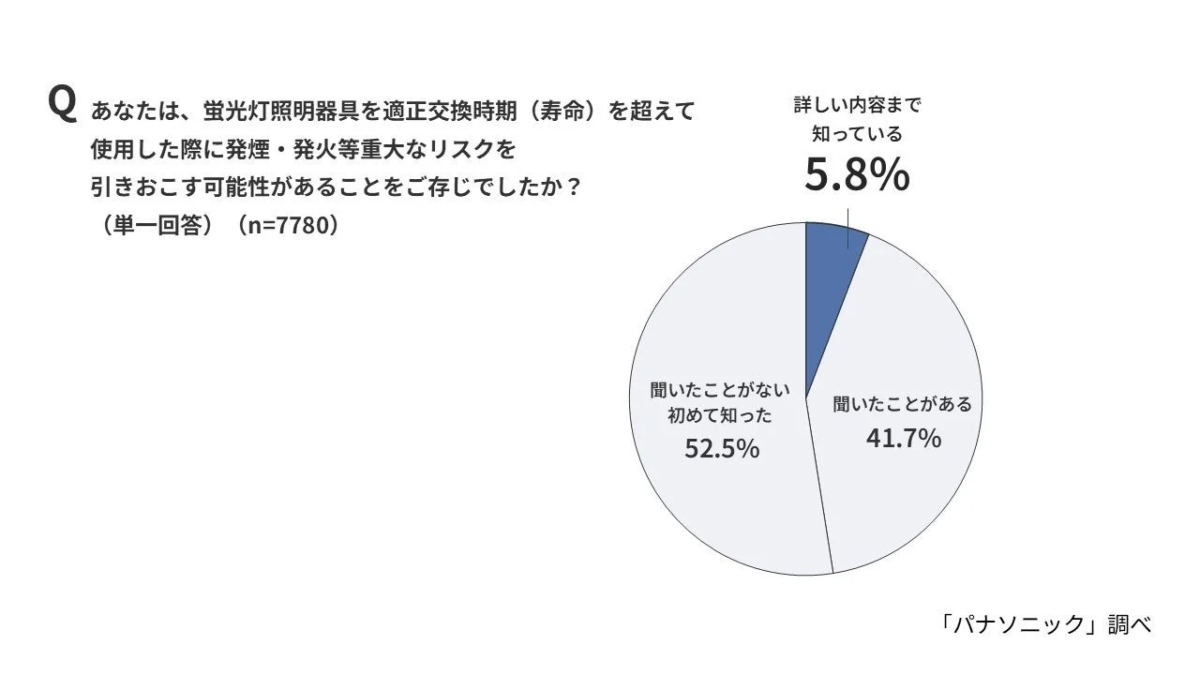
Moreover, over half of the respondents (52.5%) are unaware that using fluorescent lighting fixtures beyond their appropriate replacement period can lead to serious risks such as smoke or fire. While this figure has decreased from 56.6% in the previous survey, it remains significantly high.
Recommendations from Lighting Professionals
The Lighting Manufacturers Association and Panasonic recommend replacing the entire fixture with an LED lighting fixture, rather than just the lamp, when transitioning to LED.
Katsu Suzuki, Section Chief of the Sales Planning Department at Panasonic Electric Works Co., Ltd., Lighting Business Division, commented on the findings: “While awareness of the fluorescent lamp phase-out is gradually increasing due to continuous media coverage, approximately one-third of individuals still remain unaware. For the straight-tube and circular fluorescent lamps commonly used in households, Panasonic plans to continue production until the end of September 2027, so there is no need to rush. However, it is advisable to consider a planned transition to LED now. We recommend replacing the entire fixture, not just the lamp, when switching to LED. Although fluorescent lighting fixtures have been used for many years, they contain a power supply component called a ballast, which continues to be used even if only the lamp is replaced, leading to age-related deterioration. The appropriate replacement period indicated by the Lighting Manufacturers Association is 10 years, with a maximum service life of 15 years. For LED lighting, which is essential for daily life, please consider replacing the entire fixture to ensure safe use.”

How to Distinguish Fluorescent Lamps from LEDs
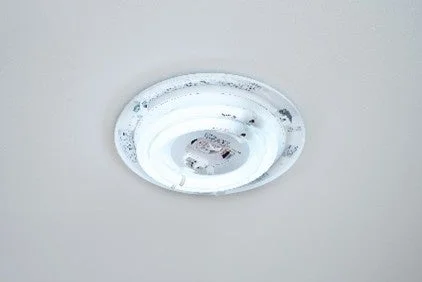
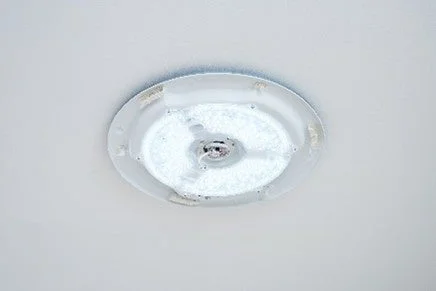
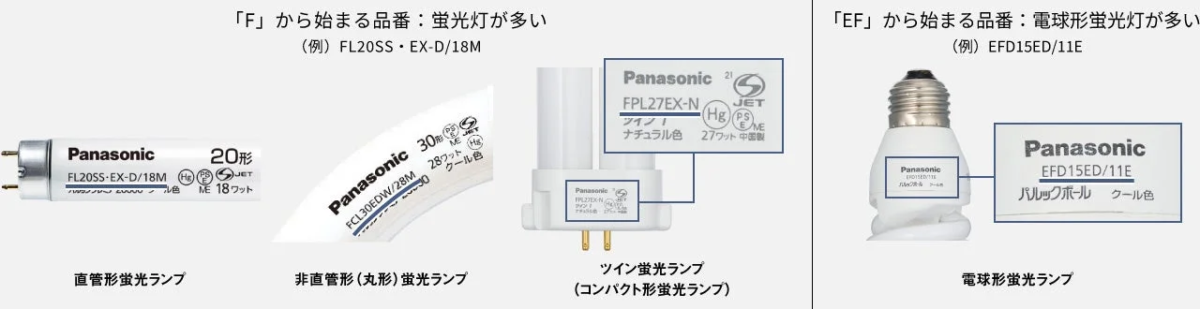
To identify your current lighting, open the light cover. Fluorescent lamps are generally glass tubes, either straight (linear), circular, or bridge-shaped (twin fluorescents). LED lights often have an integrated structure where the light source cannot be removed, or they have many small yellow or orange LED dots. If a model number is available, check the resin part at the base of the lamp or its end; fluorescent lamps usually have part numbers starting with “F” (e.g., FL20SS), while compact fluorescent lamps start with “EF.”
DIY vs. Professional Installation for LED Conversion
If your ceiling has wiring devices such as a hook ceiling rosette, you can usually remove ceiling lights or pendant lights yourself and replace them with LED lighting fixtures. However, professional electrical work is generally required for embedded ceiling lights, kitchen or bathroom fixtures, and downlights using compact fluorescent lamps. These tasks require a qualified “electrician,” so it is recommended to consult a local electrical store or contractor.

If the lighting fixture is directly attached to the ceiling without a wiring device, professional installation may be necessary. The cost of electrical work varies by store, including preliminary surveys, labor, and travel expenses. For typical electrical work, such as replacing a kitchen sink light, the time required is usually a few minutes to 15 minutes per location, assuming no major structural changes are needed.
LED Lighting Fixture Lifespan
Even if you have previously replaced fluorescent lighting with an LED ceiling light, it is advisable to consider inspection and replacement if it has been in use for more than 10 years. The appropriate replacement period for lighting fixtures is approximately 10 years. Since LED ceiling lights have been available for over a decade (Panasonic launched them in 2011), fixtures installed early on should be inspected or replaced. Internal deterioration can occur even without visible external abnormalities. Furthermore, the brightness of LED modules gradually decreases with age, which may compromise comfort.
Recommended LED Ceiling Lights
For those who can replace fixtures themselves, Panasonic offers the following LED ceiling lights:
Paluck LED Ceiling Light Standard Series for Living/Dining Rooms
This series features “PC Clear Light” (patent1) and “Text Clear Light” (patent2) for enhanced visibility of screens and text. Users can easily adjust brightness and color temperature with a remote control, and a single button allows for scene-specific lighting. Additional features include automatic on/off functions for waking and sleeping, a “flicker mode” for relaxation, and an “absence timer” for security, supporting a more comfortable daily life. The design also incorporates a “bug block” function and a structure that prevents insects from entering, simplifying maintenance. Switching from fluorescent to this LED lighting can save approximately 29,000 yen over 10 years (based on Panasonic’s comparisons).
1 Patent No. 6735514 PC Clear Light (5000K Duv-4)
2 Patent No. 6064205 Text Clear Light (6200K+Brightness)
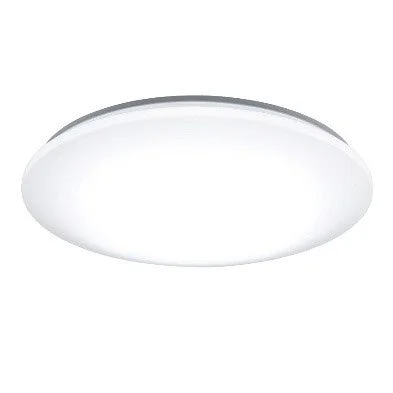

Paluck LED Ceiling Light Compact Series for Children’s Rooms and Entrances
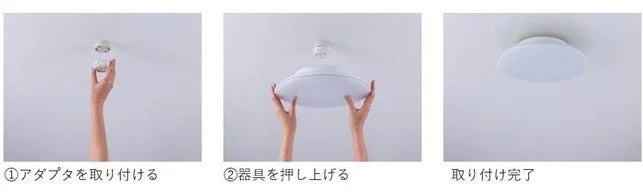
This series offers easy, two-step installation without electrical work (where applicable). Simply attach the adapter and push up the fixture. Despite its compact size, it brightly illuminates 6-tatami and 8-tatami rooms. The sealed structure with silicone between the main body and cover prevents insects and dust from entering, making cleaning effortless. Replacing fluorescent lamps with the Compact Series significantly reduces power consumption; for an 8-tatami room, it can save approximately 2,520 yen annually, totaling about 25,200 yen over 10 years.

Conclusion
The survey results indicate that while awareness of the fluorescent lamp manufacturing and import ban is around 60%, there is still a significant portion of the population unaware of the risks associated with using fluorescent lamps beyond their appropriate replacement period or with incorrectly combining straight-tube fluorescent fixtures with LED lamps. Such improper use can lead to serious accidents. Therefore, replacing the entire fixture with an LED lighting system is recommended. Acquiring correct knowledge and planning the transition to LED lighting is essential in preparation for the 2027 ban on fluorescent lamp manufacturing and import/export.