Summary of Survey Results
-
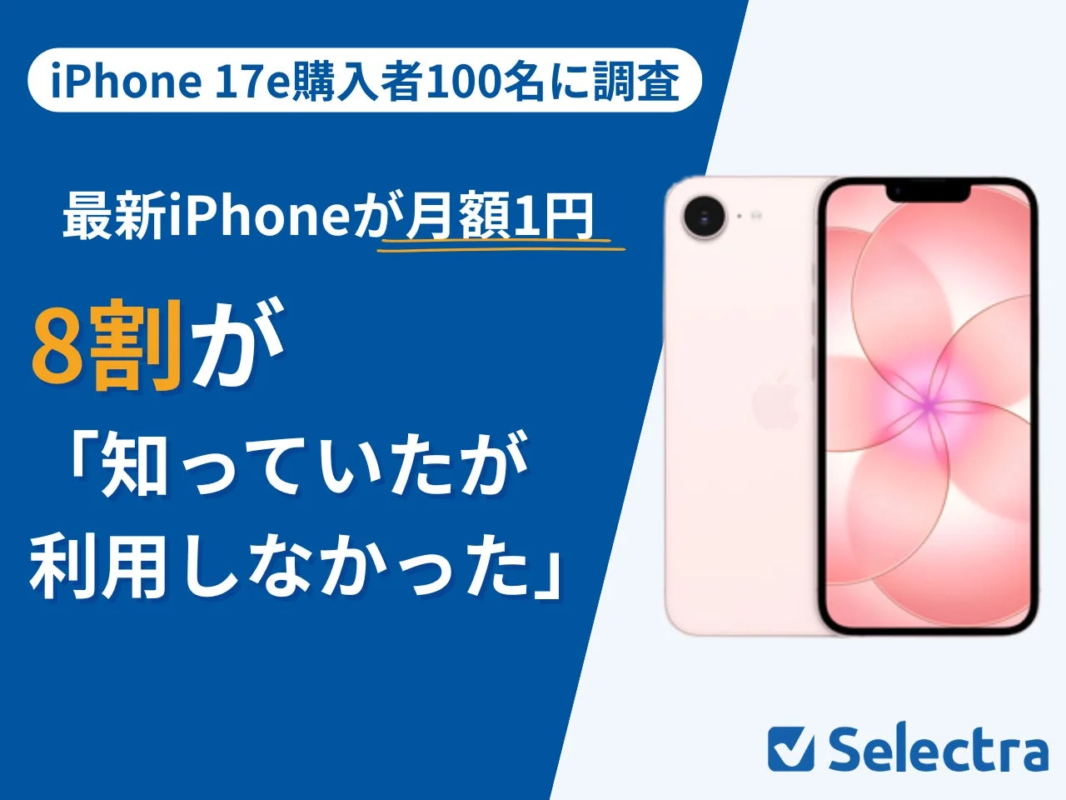
The majority of iPhone 17e purchases (66%) were made through mobile carriers, with Docomo being the most popular carrier.
-
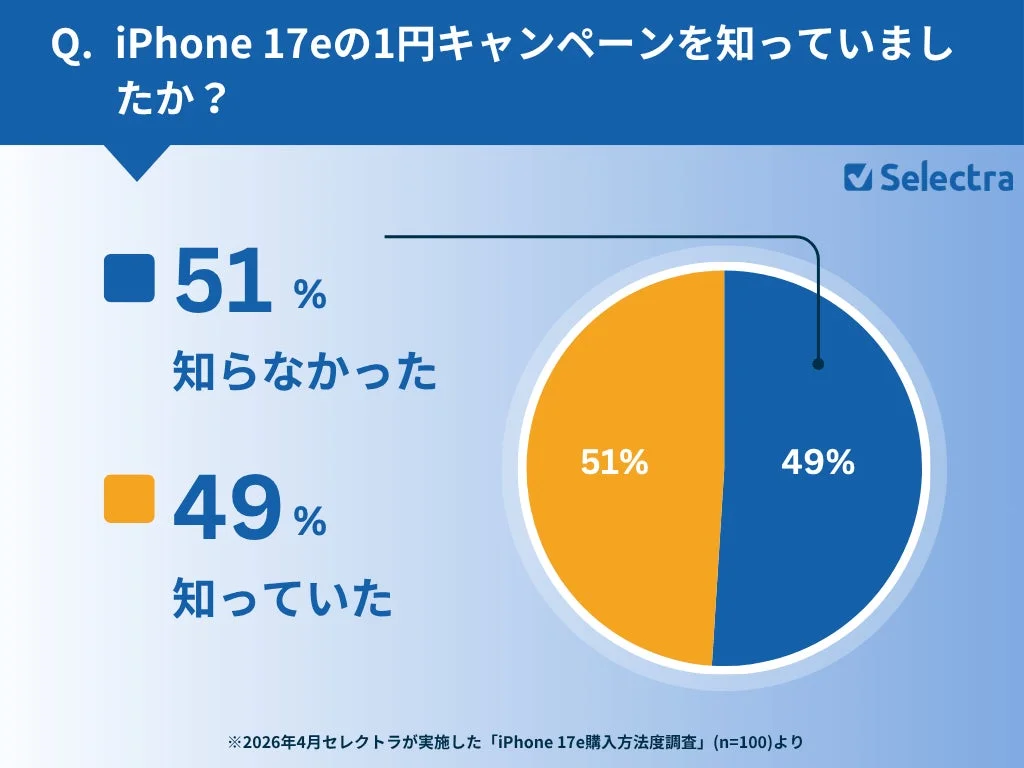
Awareness of the iPhone 17e’s “¥1 monthly campaign” was split almost evenly between those who knew and those who did not.
-
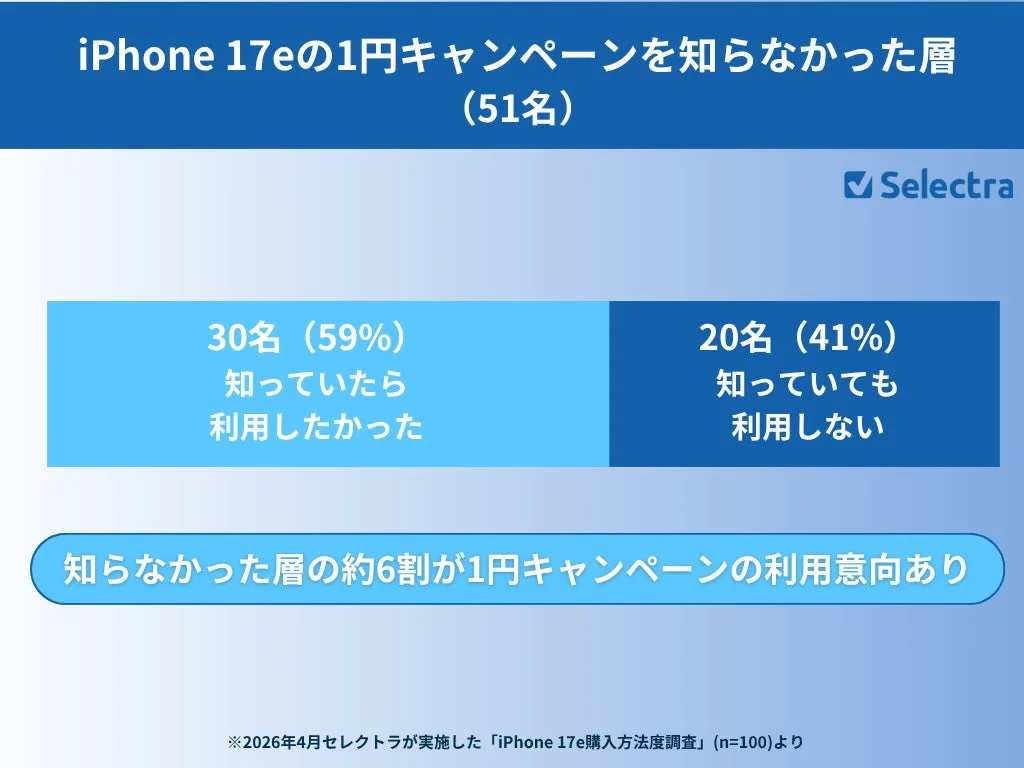
Among those unaware of the “¥1 monthly campaign,” 59% stated they would have utilized it if they had known.
-
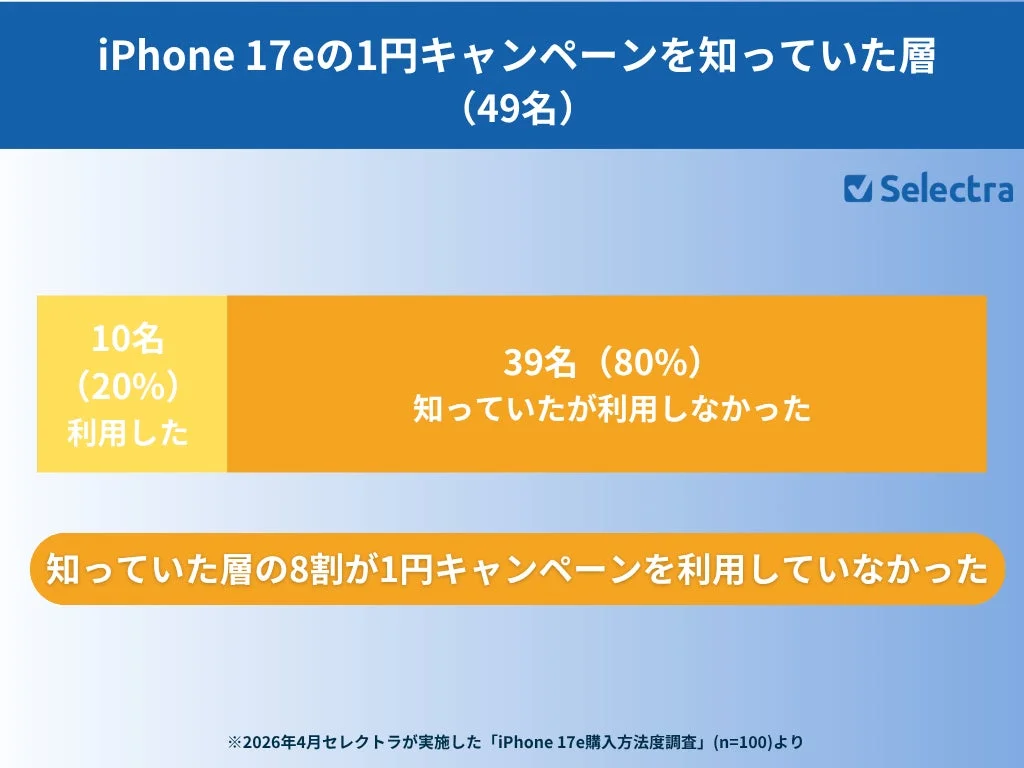
Of those who were aware of the “¥1 monthly campaign,” 80% did not use it.
-
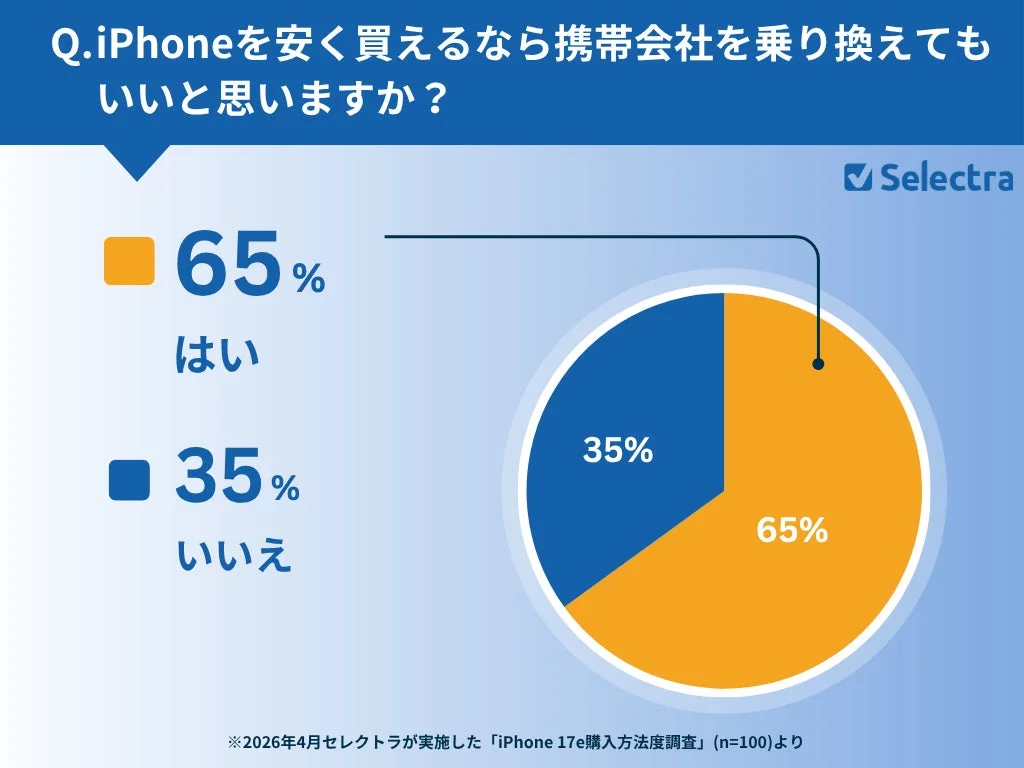
Overall, 65% of respondents indicated they would consider switching mobile carriers if it meant purchasing an iPhone at a lower price in the future.
iPhone 17e Purchase Locations
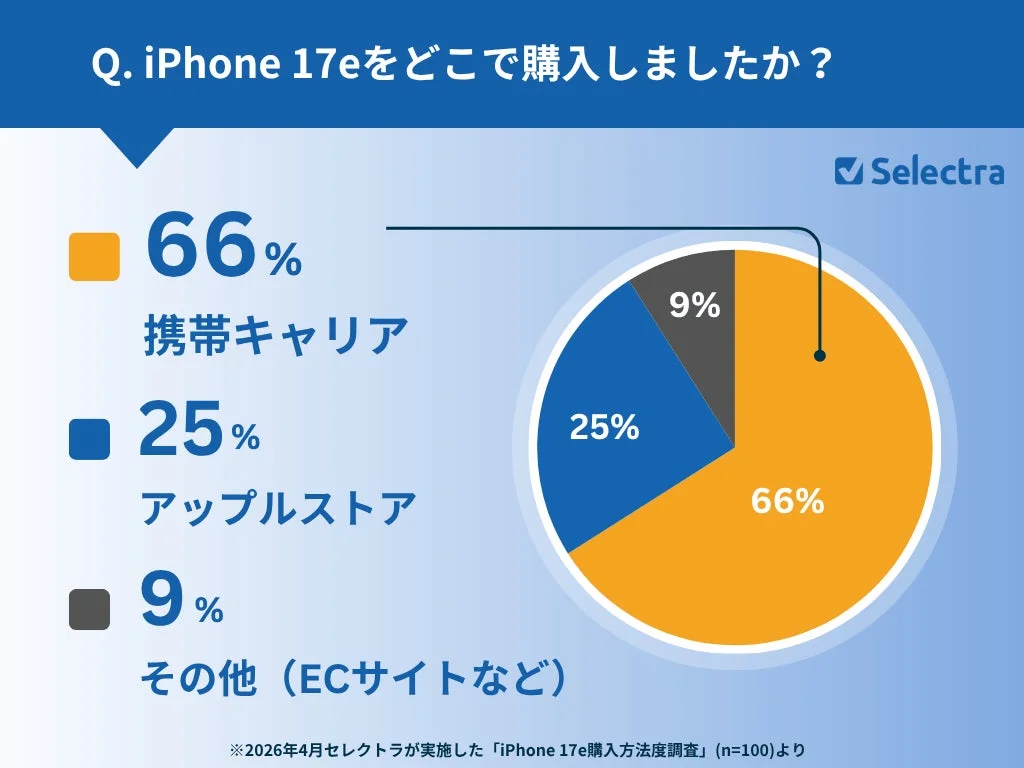
The survey found that 66% of iPhone 17e purchases were made through mobile carriers, making it the most common purchase channel, followed by Apple Store at 25%.
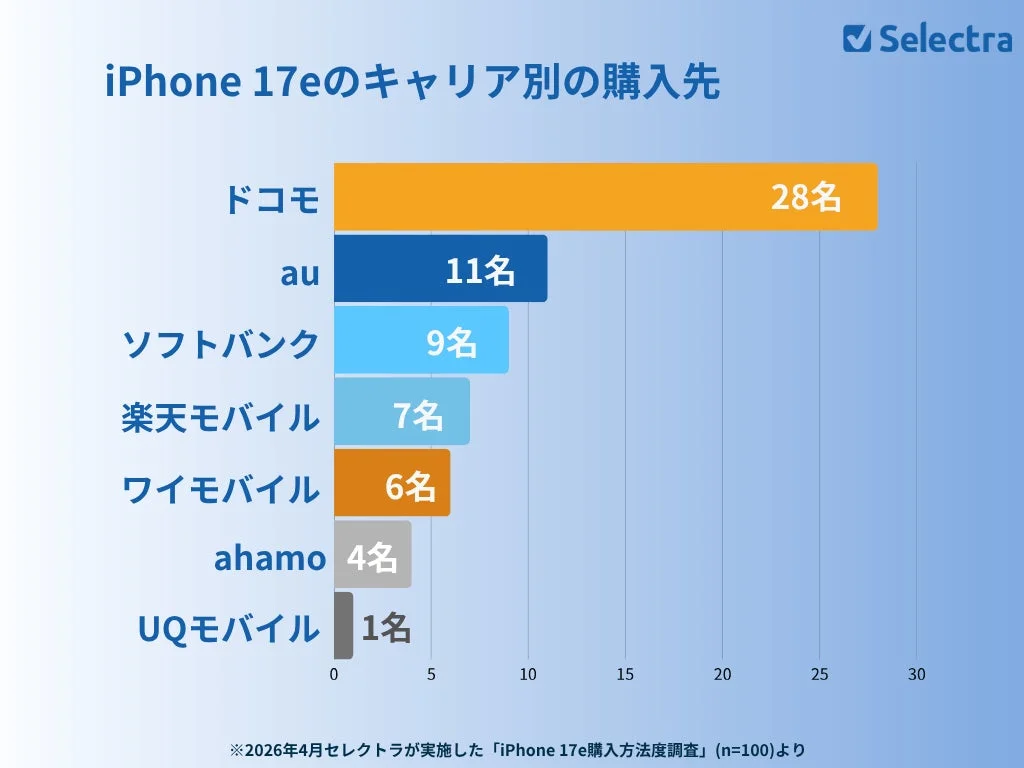
Among mobile carriers, Docomo accounted for 42% of purchases, significantly outperforming other companies.
Awareness and Utilization of the ¥1 Monthly Campaign
Since the start of iPhone 17e pre-orders, the four major mobile carriers—Docomo, au, SoftBank, and Rakuten Mobile—have offered a campaign allowing the device to be used for ¥1 per month for two years. This “latest iPhone for ¥1 per month” offer garnered significant attention in the telecommunications industry. The survey investigated consumer awareness and actual utilization of this campaign.
It should be noted that the campaign conditions are common across all four carriers: switching from another company (MNP) and the prerequisite of returning the device after two years for the ¥1 monthly price.
Campaign Awareness Almost Evenly Split
Among the 100 iPhone 17e purchasers, awareness of the “¥1 monthly campaign” was nearly split, with half knowing about it and half not.
Approximately 60% of Unaware Buyers Would Have Used the Campaign
Of those who were unaware of the “¥1 monthly campaign,” 59% responded that they “would have utilized it if they had known,” indicating regret among approximately 60% of this group. Conversely, 41% said they “would not have used it even if they had known.” Common reasons included “not wanting to switch mobile carriers” and “wanting to use the iPhone for a longer period rather than returning it after two years.”
Comments from respondents who “would have utilized it if they had known”:
-
“I didn’t know about the campaign itself. The discount (reduction in burden) is very significant, so I would have liked to use it if I had known.” (40s / Purchased at Apple Store)
-
“I was so focused on changing my existing device that I only learned about the campaign after the change. I regret not switching carriers, as I would have received the equivalent of 30,000-40,000 yen in benefits.” (20s / Purchased at Docomo)
Comments from respondents who “would not have utilized it even if they had known”:
-
“I have been using Docomo for many years and have a family discount with my wife and children, so the idea of switching to another company never occurred to me.” (50s / Purchased at Docomo)
-
“My family uses SoftBank and we have a family discount, and my home internet is also with SoftBank, so I get an internet discount. Switching carriers was not an option.” (40s / Purchased at SoftBank)
-
“I don’t think I would use it even if I knew. The 2-year return is a hassle. I don’t like the lease-like feeling.” (30s / Purchased at Apple Store)
Approximately 80% of Aware Buyers Did Not Use the Campaign, Citing Switching and 2-Year Return as Main Reasons
Among those who were aware of the “¥1 monthly campaign” for iPhone 17e, only 20% actually utilized it, with approximately 80% choosing not to.
While those who used the campaign expressed satisfaction, respondents who did not use it often cited satisfaction with their current contract or resistance to the 2-year return mechanism as primary reasons.
Comments from respondents who “utilized it”:
-
“I decided to use it because I judged it to be very cost-effective. The procedure itself was smooth and completed online, with no particular difficulties. The 2-year device return system suited my style of always wanting to upgrade to the latest model, so I found it convenient.” (30s / Purchased at Rakuten Mobile)
-
“I purchased it using au’s switching campaign. I was already looking to review my monthly fees, so the significant reduction in device cost was a big factor. The procedures were guided at the store, so it wasn’t too difficult. Although there’s a return condition, I usually replace my phone every two years, so it suited me.” (30s / Purchased at au)
Comments from respondents who “knew but did not utilize it”:
-
“I regularly use Rakuten Mobile and my communication costs are low, so I wasn’t motivated to switch to another company just for the campaign. I knew about the ¥1 monthly system, but the premise of returning the device after two years bothered me, so I ended up just buying the main unit as usual. I also find switching procedures bothersome, so this time I prioritized convenience over the campaign.” (50s / Purchased at Rakuten Mobile)
-
“I am satisfied with my current communication contract and wanted to avoid the hassle of switching to another company. I strongly prefer to own my device and use it for a long time rather than a 2-year return system. Purchasing a SIM-free version alone offers the advantage of being able to change carriers freely in the future, so I didn’t use the campaign.” (40s / Purchased elsewhere (e.g., EC site))
-
“I had been using au for many years. While the switching campaign was attractive, I was not keen on switching from au to another company, so I didn’t use it. I could have switched to UQ Mobile, but I ended up staying with au.” (30s / Purchased at au)
Overall Switching Campaign Utilization
Regardless of the “¥1 monthly campaign,” only 16% of all iPhone 17e purchasers utilized a switching campaign.
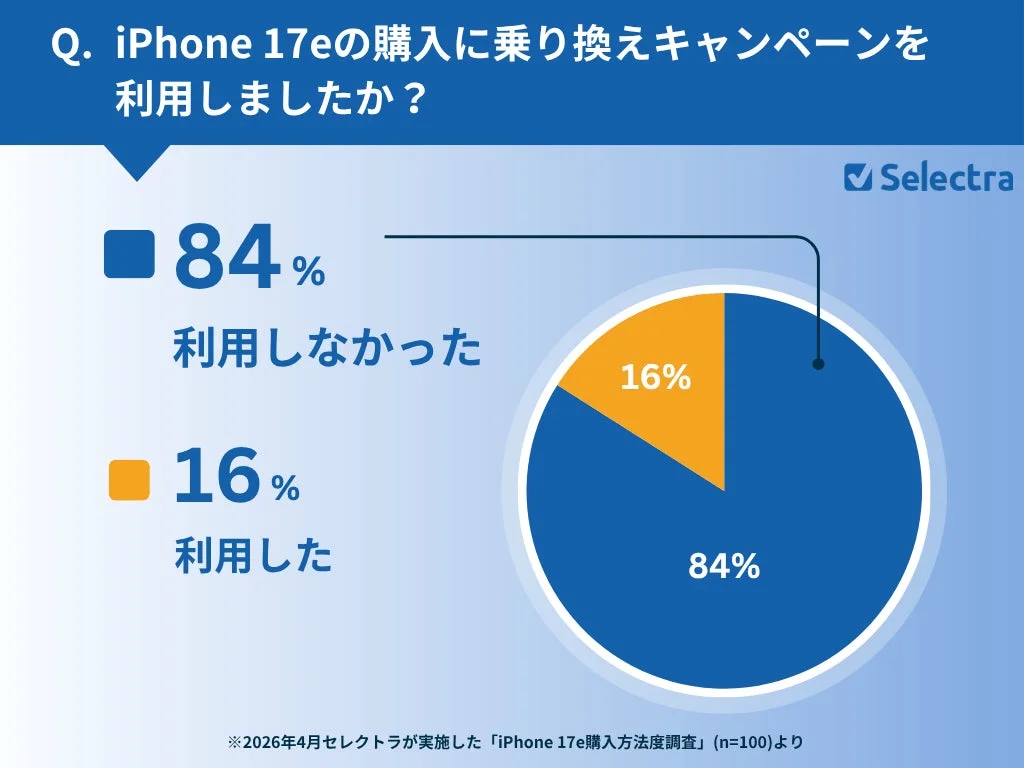
While various campaigns are offered by mobile carriers and MVNOs, actual utilization appears to be limited. This survey included cases where the purchase involved a line switch, even if the device was bought at an Apple Store or an EC site, as “switching campaign utilization.”
Future Purchase Intentions
Finally, respondents were asked about their future iPhone purchase intentions. 65% responded that they “would consider switching mobile carriers if it meant purchasing an iPhone at a lower price,” indicating a high level of interest in switching carriers as a means to acquire an iPhone affordably.
Survey Summary: Switching Campaigns as a Means to Purchase iPhones Affordably, Also Check Benefits Beyond 2-Year Return
This survey revealed that while there is high interest in switching campaigns for iPhone purchases, actual utilization remains limited. Reasons for not switching mobile carriers appear to be diverse among users, including satisfaction with current contracts, difficulty in switching due to internet bundle contracts, complexity of procedures, and difficulty in comparing service details.
However, it is also true that mobile carriers offer iPhone-specific switching campaigns as a means to acquire new customers, making them a valid option for purchasing an iPhone at a lower price. Furthermore, reviewing overall smartphone charges when upgrading an iPhone may lead to reductions in communication costs.
While 2-year return type campaigns attract attention, plans that do not require device return can also offer benefits of approximately ¥20,000 to ¥40,000 through discounts or point rewards. Therefore, comparing and confirming campaign details is crucial.
Survey Details
| Item | Detail |
|---|---|
| Survey Period | April 14 – April 15, 2026 |
| Target | 100 men and women who purchased iPhone 17e |
| Method | Internet survey |
| Research Company | CrowdWorks Inc. |
| Questions | 6 questions |
About Selectra Japan K.K.
Selectra is a French web marketing company that provides a wide range of information on essential utility services such as electricity, city gas, LP gas, internet, smartphones, and car insurance to households and corporations. (As of May 2026, services are available in 17 countries.)
“Empowering Freedom of Choice. Eliminating ‘I didn’t know.'”
Selectra Japan is committed to providing consumer-first information. It aims to realize a society where everyone can make informed decisions and choose products and services based on their own will, without being swayed by one-sided corporate information.