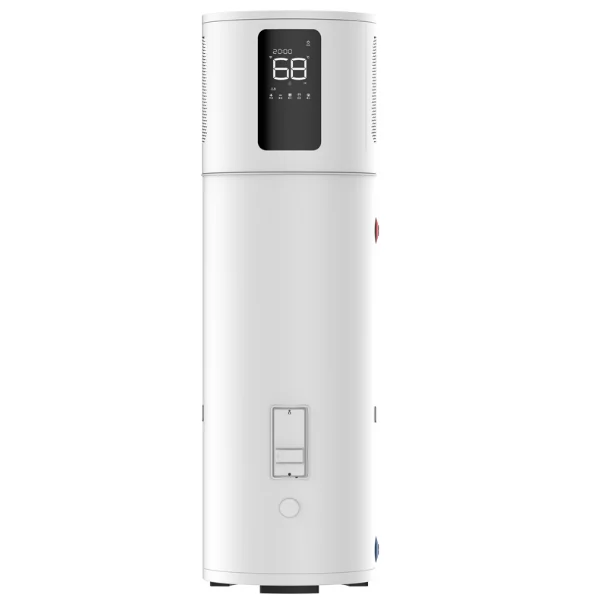
Global Heat Pump Water Heater Market: Supply Chain Analysis and Growth Forecast 2026-2032
Heat pump water heaters (HPWHs) represent an energy-efficient solution for water heating, utilizing heat energy from external sources such as air or ground. These systems convert heat into hot water efficiently, consuming significantly less energy and contributing to reduced CO2 emissions compared to conventional electric or gas water heaters.
HPWHs are available in various types, including air-source and water-source models, catering to a wide range of applications from residential to commercial settings. Modern designs often feature low noise operation and inverter control for enhanced efficiency, ensuring stable hot water supply year-round while minimizing environmental impact.

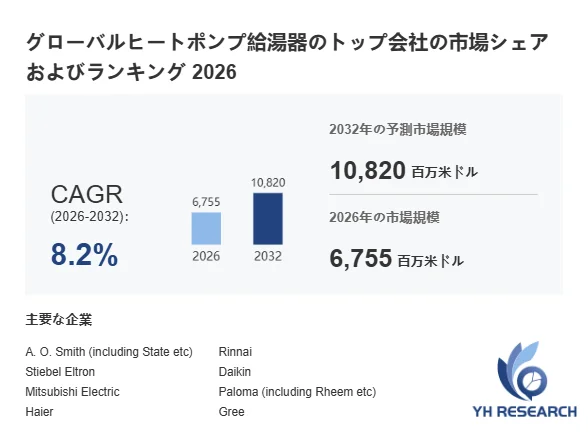
According to YH Research, the global heat pump water heater market is anticipated to grow from USD 6.264 billion in 2025 to USD 10.820 billion by 2032, exhibiting a Compound Annual Growth Rate (CAGR) of 8.2% from 2026 to 2032. This growth is fueled by the expanding adoption of HPWHs, which convert thermal energy from air or ground into heat for water, thereby increasing the demand for sustainable hot water solutions in both residential and commercial sectors.
Market Overview and Product Classification
Heat pump water heaters employ technology that uses electricity to transfer heat, achieving 2 to 3 times the energy efficiency of traditional electric resistance water heaters. Products are categorized by capacity, ranging from less than 60L to over 500L, and by application, including residential, hotels/apartments, schools, hospitals, office buildings, food service facilities, gyms, and government institutions. HPWHs are broadly classified into air-source and water-source heat pump types, allowing for optimal model selection based on installation environment and intended use.
Key Market Growth Drivers
The market’s expansion is supported by the increasing demand for improved energy efficiency, reduced utility costs, and compliance with environmental regulations. Governments globally are promoting the adoption of HPWHs through incentives, tax credits, and rebates for high-efficiency water heaters. Rising electricity prices and stricter regulations on carbon emissions are particularly boosting the demand for environmentally friendly hot water solutions. Furthermore, the latest models integrate smart thermostats, noise reduction, and faster heating functions, making them suitable for both residential and hospitality/commercial markets.
Regional Market Dynamics
Major production regions for HPWHs include Japan, Europe, North America, and China. Key players in this market comprise Daikin Industries, Mitsubishi Electric, Rinnai, A.O. Smith, Haier, and Paloma. These companies are expanding their regional market shares by developing high-efficiency models and enhancing manufacturing capabilities. In the Japanese market, a steady increase in market size is projected from 2025 to 2032, with the residential and hotel/apartment segments expected to be primary growth drivers.
Challenges and Risk Factors
The HPWH market faces several challenges, including the high cost of high-performance models, constraints on installation space, refrigerant regulations, the rapid pace of technological evolution, and price competition. Fluctuations in material prices and changes in import policies are also notable risk factors that could impact production and sales costs. Additionally, a lack of consumer education regarding performance benefits may hinder broader adoption.
Technological Trends and Future Outlook
Recent industry trends over the past six months indicate a growing integration of smart hot water functions through AI control and IoT connectivity. Advancements also include models that deliver stable hot water performance in low-temperature environments, integration with renewable energy sources, and the adoption of noise reduction and miniaturization technologies to better meet consumer needs. Looking ahead, the expansion of residential, commercial, and industrial markets, along with strengthened energy efficiency regulations and contributions to CO2 reduction targets, are expected to be key factors driving HPWH market growth.
In conclusion, the heat pump water heater market is poised for continued robust growth, driven by enhanced energy efficiency, adherence to environmental regulations, and consumer demand for reduced utility costs. Companies are expected to strengthen their global competitiveness through product diversification, technological innovation, and the integration of smart features.
This article highlights findings from the YH Research report, “Global Heat Pump Water Heater Top Companies Market Share and Ranking 2026.”
For more details on the report or to request a free sample, please visit:
https://www.yhresearch.co.jp/reports/1245422/heat-pump-water-heaters