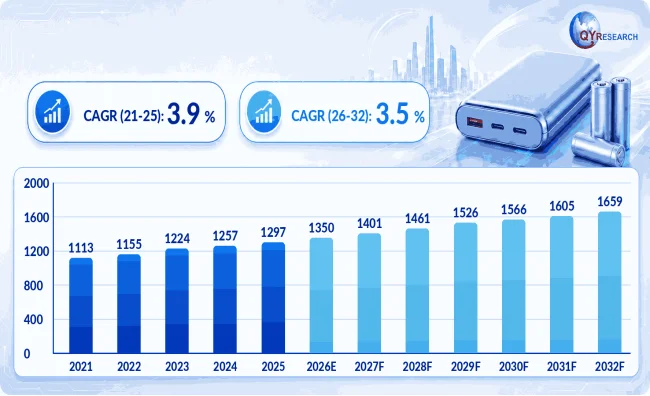
Global Market for Ternary Lithium-ion Cylindrical Cells in Mobile Batteries Expected to Reach .659 Billion by 2032
The global market for ternary lithium-ion cylindrical cells, integral components of mobile batteries, is projected to achieve a market size of $1.659 billion by 2032, according to the latest report by QYResearch. This growth is anticipated at a Compound Annual Growth Rate (CAGR) of 3.5% over the forecast period from 2026 to 2032.
Ternary lithium-ion cylindrical cells, primarily in standard sizes such as 18650 and 21700, utilize ternary cathode materials and graphite-based anode materials. These cells are predominantly used in mobile batteries, fast-charging products, and as backup power for consumer electronics, providing energy storage, stable discharge, and safe power supply. The increasing adoption of high-power charging devices and stricter safety certification requirements are driving the market towards higher capacity, improved variability management, and enhanced safety margins.

Source: QYResearch. As the industry is constantly changing, please contact QYResearch for the latest data.
Key Players and Market Share
In 2025, the global market for ternary lithium-ion cylindrical cell manufacturers was dominated by key players including EVE Energy, Sunpower, and Lishen. These top three companies collectively held approximately 18.03% of the market share.
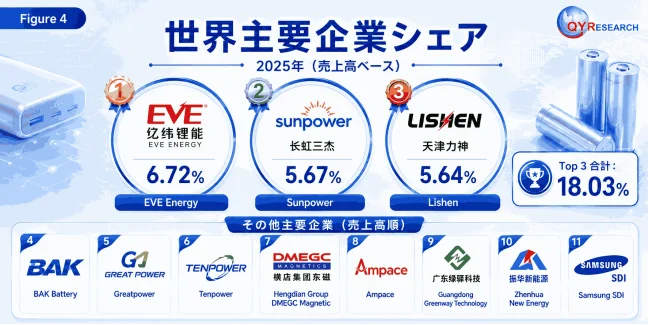
Source: QYResearch. As the industry is constantly changing, please contact QYResearch for the latest data.
Industry Chain Analysis
The industry chain for ternary lithium-ion cylindrical cells is segmented into upstream, midstream, and downstream components.
-
Upstream: This segment primarily involves ternary cathode materials, graphite anode materials, electrolytes, separators, copper foil, aluminum foil, and cylindrical steel cases. Key suppliers include Ronbay Technology, CNGR, BTR, Putailai, Capchem, SEMCORP, Toray, and UBE. The quality of cathode and anode materials significantly influences energy density and rate capability, while electrolytes, separators, and metal foils affect safety, lifespan, quality stability, and cost fluctuations.
-
Midstream: The midstream processes encompass slurry preparation, coating, calendering, slitting, winding, canning, electrolyte injection, sealing, formation, capacity sorting, and aging. For mobile battery applications, emphasis is placed on capacity consistency, internal resistance, thermal stability, and safety valve reliability. Yield rates, automation levels, and inspection accuracy directly impact unit costs, delivery stability, and the success rate of brand customer certifications.
-
Downstream: The downstream segment consists of mobile battery brands, consumer electronic accessory companies, and battery pack assembly manufacturers. Notable customers include Anker, Xiaomi, Baseus, UGREEN, Romoss, Cuktech, and Belkin. High-capacity cylindrical cells contribute to longer usage times and stable fast-charging output, facilitating smaller, lighter, and better heat-managed final products, compliance with safety standards, and improved user experience.
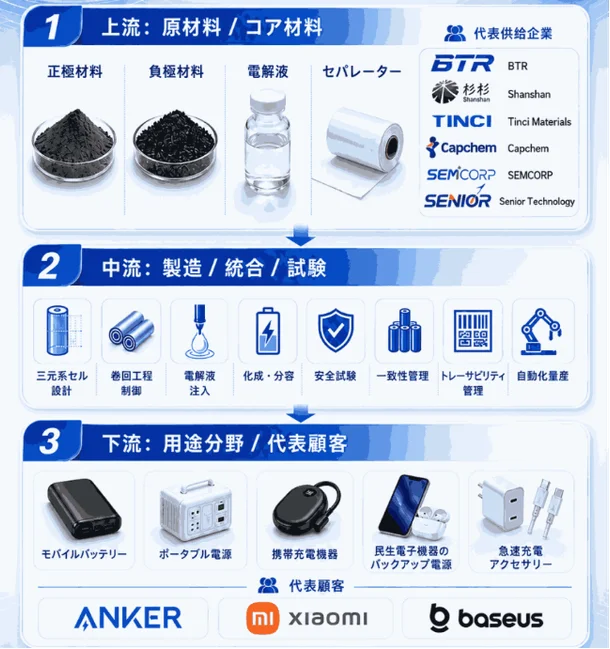
Source: QYResearch. As the industry is constantly changing, please contact QYResearch for the latest data.
Industry Development Opportunities and Risk Analysis
The primary growth driver is the continuous expansion of demand for high-power mobile batteries in smartphones, tablets, portable outdoor devices, and for business trips and travel. Terminal brands are increasingly sourcing high-capacity, low-internal resistance, and highly consistent cylindrical cells to meet requirements for fast charging, extended usage, and safety certifications, leading to increased orders for high-quality ternary lithium cylindrical cells.
However, significant inhibiting factors include simultaneous increases in cost pressure and demands for safety and consistency. Fluctuations in ternary material prices affect cell costs, while fast-charging mobile batteries require stricter management of internal resistance, thermal runaway prevention, cycle life, and batch-to-batch variation. Manufacturers may need to invest additionally in inspection, sorting, and certification, which could potentially curb profitability and the pace of increasing production in lower price segments.
Future Outlook
The market is expected to shift towards high-capacity 21700 cells, low internal resistance, fast-charging capabilities, precise cell sorting, and enhanced safety redundancy. Leading manufacturers are likely to optimize material design, automate winding processes, implement online inspections, and engage in joint development with brand customers to improve quality consistency and certification efficiency. Conversely, the market share of low-priced, homogeneous products is expected to gradually decline.
Contact Information
For further inquiries, please contact QY Research Corporation:
URL: https://www.qyresearch.co.jp
Email: japan@qyresearch.com