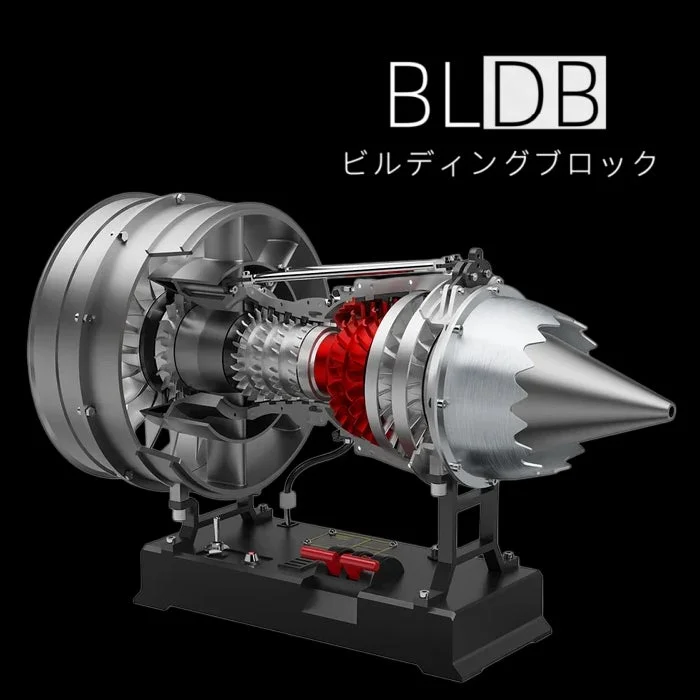
- BLDB Introduces “DM121” Turbofan Engine Model Kit for Immersive Mechanical Exploration
- Understanding Internal Structure Through Assembly
- Internal Mechanism Rotates Electrically After Completion
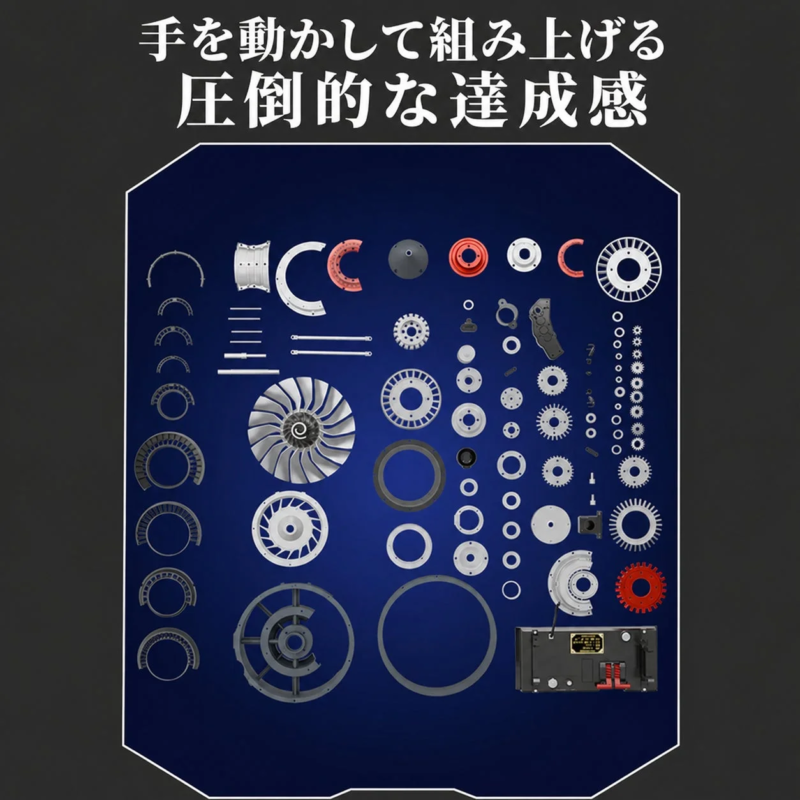
- Assemble Over 300 Parts Step by Step
- Three-Dimensional Understanding Different from Diagrams and Videos
- Desktop Model Utilizing Metal Texture
- For Adult Hobbies and Gifts
- Use Summer Time for Crafting
- Summer Bonus Sale Outline
- Product Overview
- About BLDB (Building Block)
BLDB Introduces “DM121” Turbofan Engine Model Kit for Immersive Mechanical Exploration
BLDB (Building Block), a specialist in precision metal models and 3D metal puzzles, has launched the “1/12 Electric Dual-Spool Turbofan Engine Assembly Kit DM121.” This sophisticated mechanical model offers an engaging way to explore the intricate internal structure of an aircraft engine through hands-on assembly.
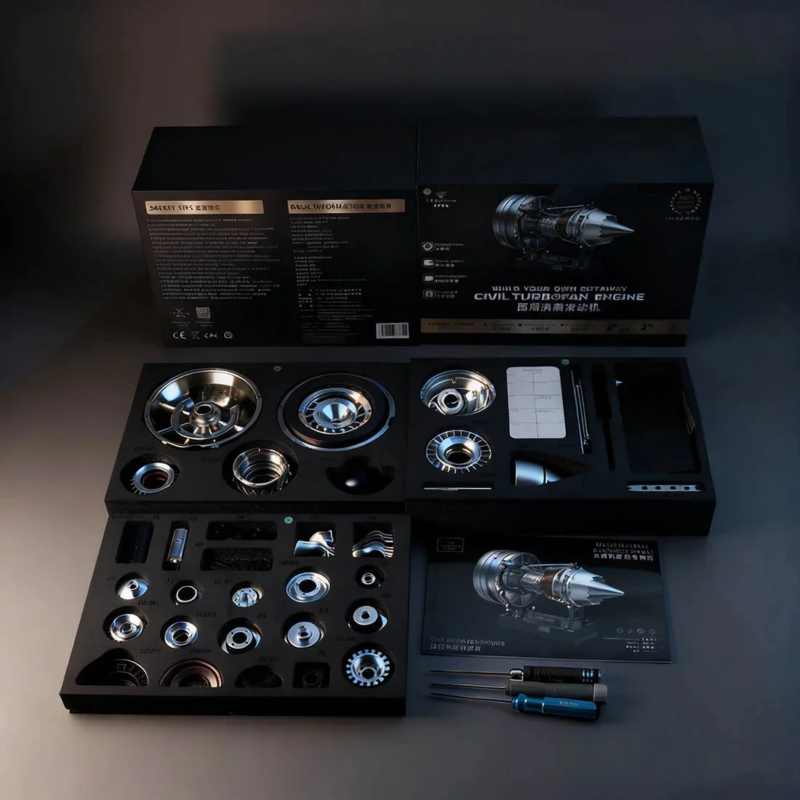
The DM121 kit comprises over 300 metallic parts, designed for adult hobbyists. Assembling components such as the fan, shafts, casing, and internal units sequentially allows builders to understand the positioning and connections of each part within a turbofan engine. Once completed, an integrated motor powers the model, enabling the front fan and internal mechanisms to rotate in unison.
To celebrate its launch, BLDB is currently running a summer bonus sale. The DM121, typically priced at 77,406 JPY (including tax), is available at a sale price of 59,543 JPY (including tax). By applying the coupon code “SUMMER20” at checkout, customers can receive an additional 20% discount, bringing the price down to 47,634 JPY (including tax).
Understanding Internal Structure Through Assembly
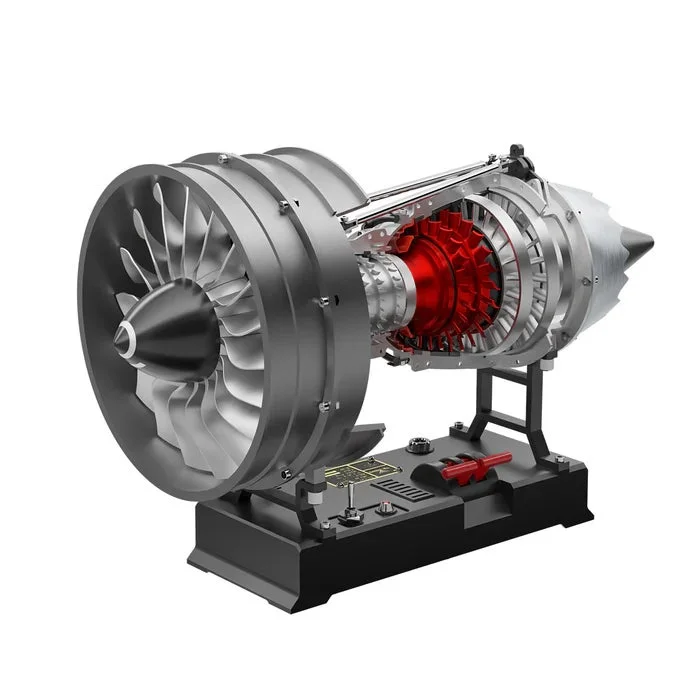
Turbofan engines are complex machines composed of numerous parts, including a large-diameter fan, multiple rotating systems, shafts, and turbines. Grasping the precise relationships of these internal components and how rotation is transmitted can be challenging from external views or photographs alone.
With the DM121, parts of varying shapes and functions are assembled module by module. Builders proceed by verifying the orientation and mounting position of each component, thereby tracing the internal structure step-by-step—a process that is not possible when merely observing a finished product.
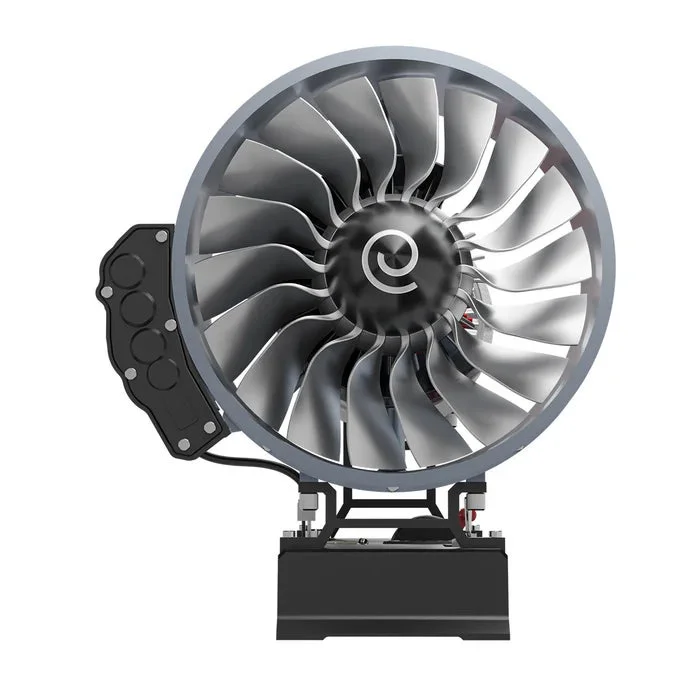
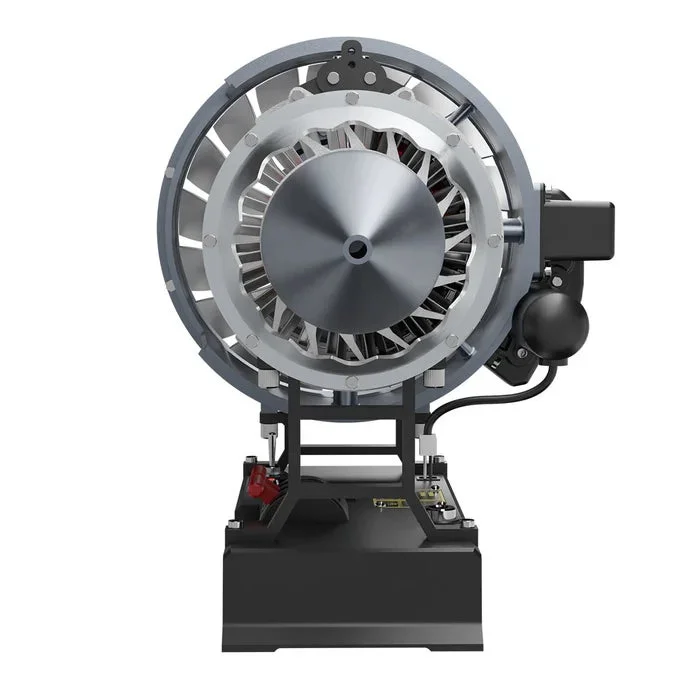
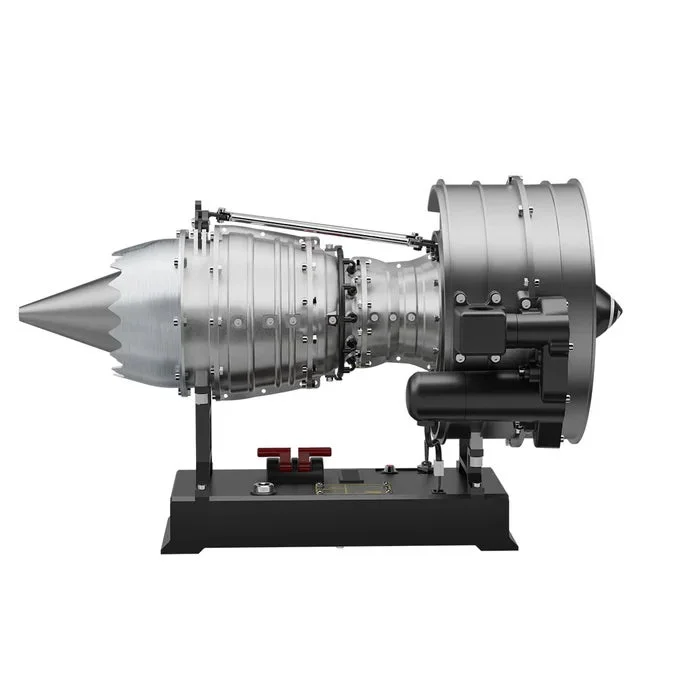
The model utilizes over 300 parts, primarily made from aluminum and zinc alloys. A complete set of assembly tools and an instruction manual are included, allowing builders to start without needing additional equipment. The estimated assembly time is over two hours, with a difficulty rating of 3 out of 5 stars. For those new to assembling precision metal models, it is recommended to take out only the parts needed for each unit and proceed module by module.
Internal Mechanism Rotates Electrically After Completion
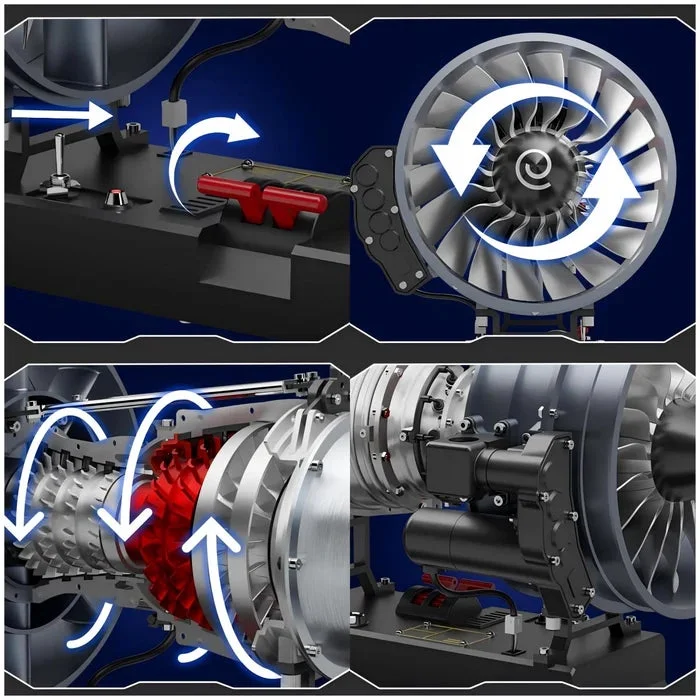
The term “dual-spool” refers to a turbofan engine structure with two rotating systems. The DM121 model is designed based on this concept, featuring a three-dimensional arrangement of the fan, internal rotating parts, and shafts. While the DM121 is a model and does not replicate the full functionality of a real engine, it allows observation of how multiple components align around a central axis and connect in the front-to-back direction.
By examining the model from the side rather than just the front, observers can appreciate the sheer number of components housed within the external casing. When powered on, the internal motor activates, causing the front fan and internal mechanisms to rotate synchronously. This allows for observation of how the individual parts, confirmed during assembly, function as a single mechanism. The ability to compare static and operational states is a key feature of this electric model. Builders can inspect part shapes and mounting positions when stopped, and then observe the rotation from the fan to the internal parts when operating. An individual who assembled the model can connect the visible movements with the parts they installed during the building process.
Charging requires a DC 5V USB power source. The charging time is approximately 2 hours, and a full charge provides about 30 minutes of continuous operation. This allows for activation during viewing, differing from continuously operating display items, and enabling enjoyment of the structure when desired. It is important to note that this product is a model for display and learning, reproducing the structure and rotational movement of a turbofan engine. It does not have combustion capabilities using fuel or generate actual thrust.
Assemble Over 300 Parts Step by Step
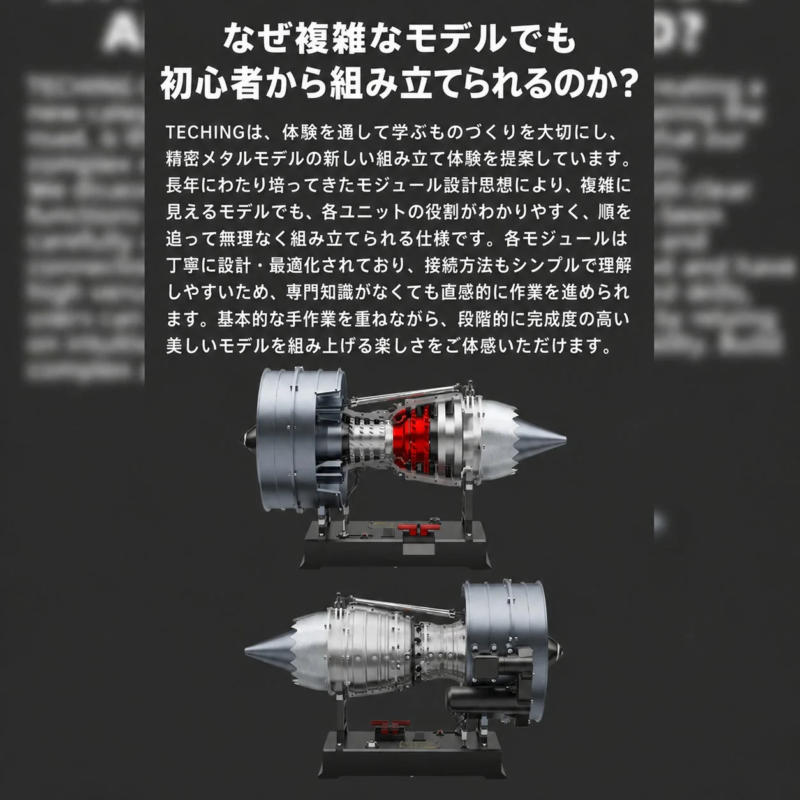
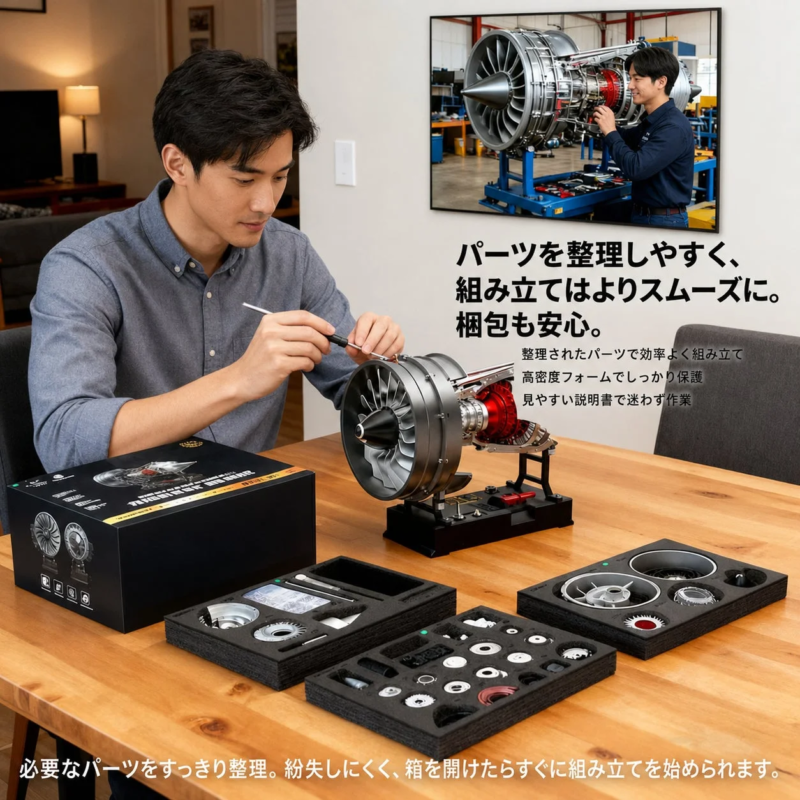
Upon opening the box, the engine is presented as numerous parts and units. While the completed structure may appear complex, following the instructions to build from smaller units allows builders to understand the purpose of each component’s placement. The initial stages of assembly focus on identifying part shapes, screw hole positions, and distinguishing between front, back, and orientation. Even similarly shaped parts have different mounting locations, making the process of matching manual diagrams with physical parts a part of the kit’s enjoyment. Organizing and arranging parts by type, then taking them out in order of use, can help ensure a smooth assembly process.
As assembly progresses, individual parts form units, and multiple units combine to create the overall engine structure. The front fan, the internal mechanism centered on the axis, the supporting frame, and the outer casing are added sequentially, gradually bringing the complete model to life on the workbench. This process requires not only tightening screws but also verifying the positional relationship between already assembled sections and new components.
Metal parts offer a distinct tactile experience and weight compared to plastic models. The overall weight increases with each small part added, and connecting units creates structural rigidity. Beyond the aesthetic appeal of the finished product, the sensation of metal components transforming into a single mechanical model is an integral part of the DM121 assembly experience. With included tools, even those new to precision models can begin easily. However, given over 300 parts, it is advisable to proceed calmly, verifying the orientation of each part and the tightness of screws at every step, rather than rushing to completion. If interrupting the work, storing assembled units separately from unused parts can help maintain workflow for the next session.
Three-Dimensional Understanding Different from Diagrams and Videos
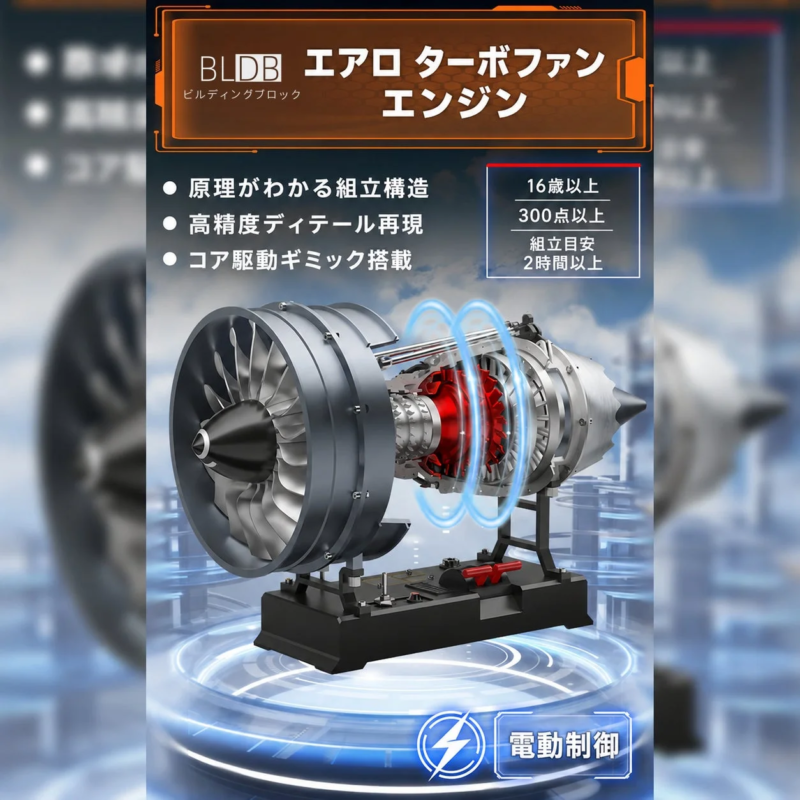
The structure of an aircraft engine can be studied through cross-sectional diagrams in books, videos, and CG. While these are useful for learning part names and operating principles, screens or printed pages may make it difficult to simultaneously grasp size, depth, and the spacing between components. A three-dimensional model allows for examination from the front, side, and diagonally above, changing perspective to confirm the structure. Relationships easily overlooked in two dimensions, such as the ratio of the fan’s diameter to the body’s length, components overlapping around the central axis, and the distance between the casing and internal units, become visible. The ability to manually reorient the model allows for immediate examination of any interesting part from a different angle.
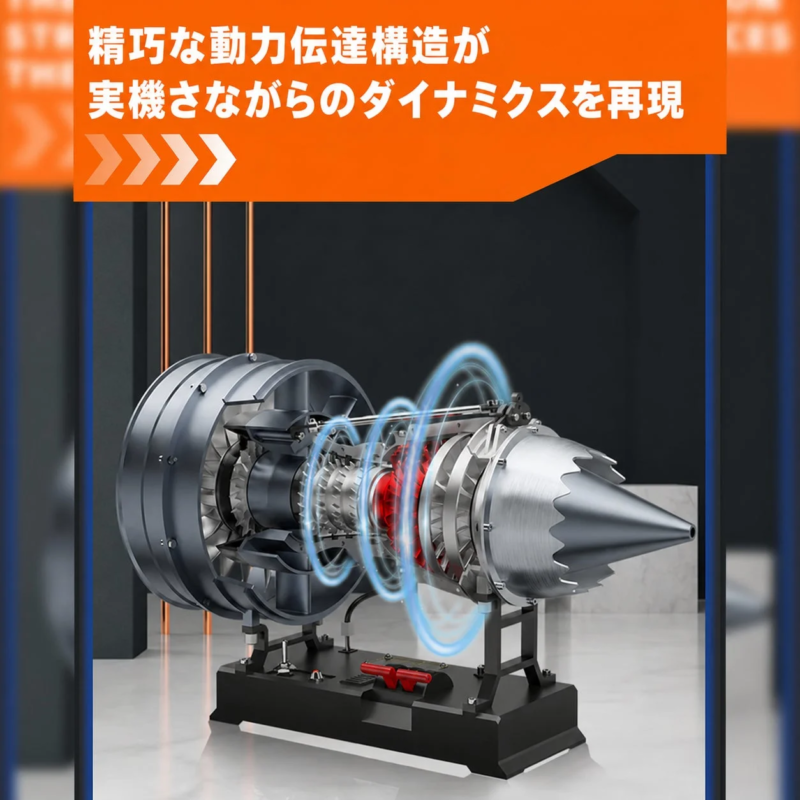
With the DM121, builders personally install each component before observing the finished product. This hands-on experience of which part was added where and when makes it easier to trace the internal structure even after completion. This continuity between assembly and observation distinguishes it from pre-assembled display models. While this product is not certified as an aerospace engineering educational tool, nor is it intended for learning actual engine design or maintenance procedures, it can serve as an accessible entry point for those interested in turbofan engines, helping to visualize component placement and rotational mechanisms in three dimensions. Using the model as a starting point, further research into real engine cross-sections and part names can connect abstract information with the tangible structure at hand.
Desktop Model Utilizing Metal Texture
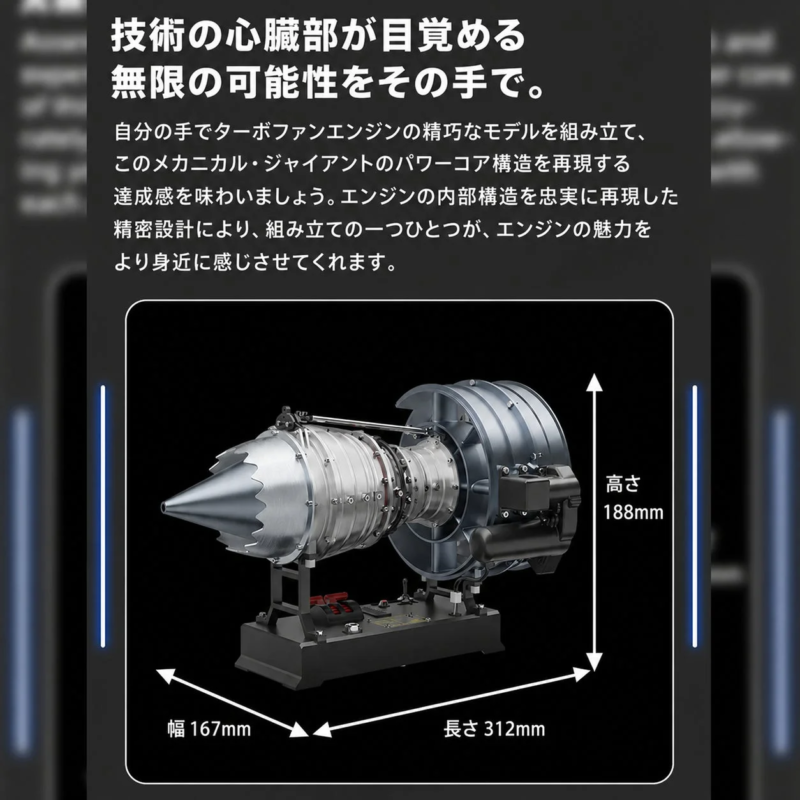
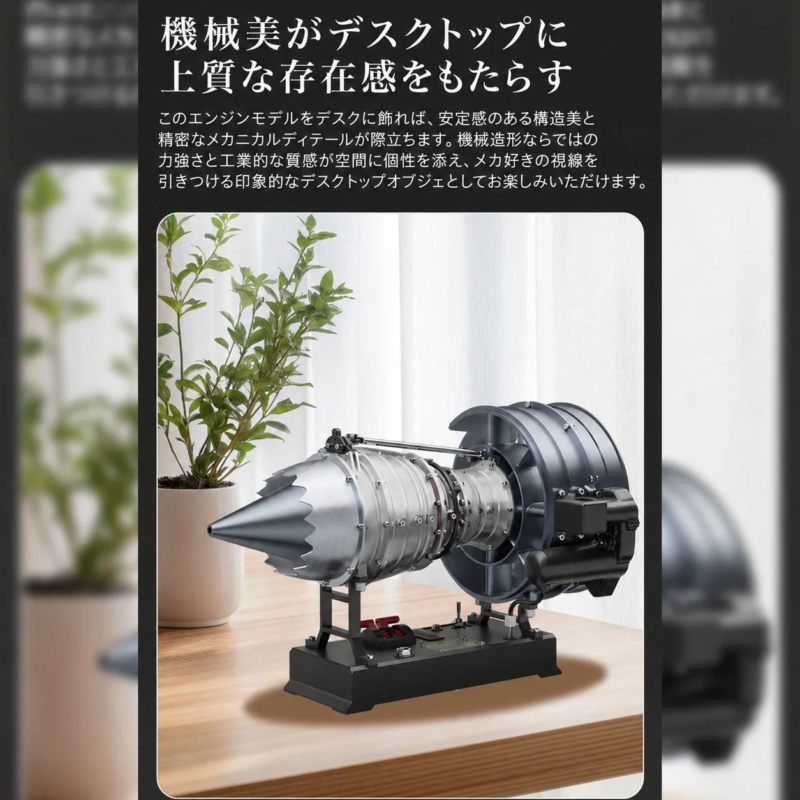
The completed model measures approximately 312 x 167 x 188mm and weighs about 2.8kg. Despite its desktop size, it possesses the substantial feel of metal parts and a three-dimensional presence typical of an engine model. With the front fan and internal mechanical structure visible, it makes an attractive display piece for studies, workspaces, or model shelves. It is suitable not only for those interested in aircraft or machinery but also for individuals who enjoy challenging precision assembly kits or appreciate industrial design.
The large-diameter fan, emblematic of a turbofan engine, is visible from the front, while the frame and internal units can be seen from the side. The design does not fully enclose the interior with external casing, ensuring that the assembled parts remain visible as highlights of the model even after completion. As light strikes the metal surfaces, the contours and depth of each component become apparent, with the impression changing depending on the viewing angle. The approximate 2.8kg weight provides a significant presence, distinct from smaller ornaments. When placing the model, allowing some space around it in addition to its size will enhance visibility of the interior from both the front and sides. For enjoying the rotational movement, place it on a stable, level surface and keep the area around moving parts clear of obstructions.
It can serve as a desktop objet d’art in a study or office, showcasing mechanical structure. On a model shelf, alongside aircraft or vehicle models, it can shift the focus from external appearance to the underlying mechanisms that power transportation. In retail or office display areas, it can be presented in a static state to highlight details, with electric operation demonstrated as needed. The target age is 16 years and older. Due to small parts, ensure a stable workspace and follow the included instructions during assembly.
For Adult Hobbies and Gifts
The DM121 is designed not merely for purchase as a finished display item, but as a product where the recipient actively completes the assembly. The entire process—from opening the box and inspecting parts, to assembling with tools, and finally powering it on for the first time—constitutes a continuous experience. For seasoned model builders, it offers the challenge of a mechanical model using metal parts. For those knowledgeable about aircraft but new to model building, it presents an opportunity to examine engine structures firsthand. Even individuals unfamiliar with both aircraft and models but who appreciate mechanical watches, automobiles, tools, or industrial product design can enjoy the process of metal components coming together.
While the estimated assembly time is over two hours, individual speeds may vary. It can be completed during a dedicated block of time on a holiday, or tasks can be divided into units and spread over several days. This hobby is also accessible for those looking to disengage from screen time and focus on hands-on work. As a gift, it can be chosen for milestones such as birthdays, job promotions, or retirement, offering not just a finished model but also the gift of an engaging building experience, distinguishing it from conventional ornaments. The target age is 16 and above, making it suitable for those who enjoy working with small, intricate parts. For families or parents and children working together, tasks can be divided—one person checking part numbers, another reading instructions, and another proceeding with assembly—allowing for a shared experience. Given the presence of small parts, adults should supervise and ensure a safe working environment, depending on age and experience levels.
Use Summer Time for Crafting
The summer bonus sale is designed to encourage individuals to embark on hobbies they have long been interested in. The DM121 is not a product where the experience ends with the purchase. The enjoyment continues through the time spent inspecting parts, focusing on assembly, observing its operation after completion, and displaying it in a room. Mechanical models, precisely because they require effort to complete, create lasting memories of which parts were built by hand. When the fan operates after completion, parts that were separate during assembly come together as a single, moving mechanism. The tactile satisfaction of assembly combined with the dynamic movement of an electric model is a key feature of this product.
Summer Bonus Sale Outline
BLDB is holding a summer bonus sale where eligible products can be purchased at a discounted price. The “DM121” is available for 59,543 JPY (including tax), down from its usual price of 77,406 JPY (including tax). By entering the coupon code “SUMMER20” at the time of purchase, an additional 20% discount will be applied, making the final price 47,634 JPY (including tax).
Please check the BLDB official website for campaign terms and conditions, eligible products, stock availability, and the end date of the sale.
Summer Bonus Sale: https://bldb.jp/collections/bonus-sale
Product Overview
-
Product Name: 1/12 Electric Dual-Spool Turbofan Engine Assembly Kit DM121
-
Model Number: DM121
-
Scale: 1/12
-
Number of Parts: 300+
-
Materials: Aluminum alloy, Zinc alloy
-
Completed Size: Approx. 312×167×188mm
-
Weight: Approx. 2.8kg
-
Drive System: Electric motor
-
Battery: 3.7V, 800mAh rechargeable lithium battery
-
Charging Method: DC 5V USB charging
-
Charging Time: Approx. 2 hours
-
Continuous Operation Time: Approx. 30 minutes on a full charge
-
Estimated Assembly Time: 2+ hours
-
Difficulty: ★★★☆☆
-
Target Age: 16 years and older
-
Accessories: Engine model parts set, assembly tool set, assembly manual
Product Page:
Note: Assembly time and difficulty may vary by individual.
Note: This product is a model that reproduces the structure and rotational movement of a turbofan engine. It does not have combustion functions or generate actual thrust.
Note: Prices and campaign details are accurate at the time of publication and are subject to change without notice.
About BLDB (Building Block)
BLDB is a specialized brand offering 3D metal puzzles and precision mechanical models. The brand develops metal assembly kits inspired by insects, marine life, dragons, structures, vehicles, and engines. BLDB aims to provide models that offer both the satisfaction of assembling parts one by one and the enjoyment of appreciating the unique metallic texture and mechanical beauty of the completed product.
Company Overview
-
International Sales Entity: SHUEI NETWORK TRADING CO., LTD.
-
Brand Name: BLDB (Building Block)
-
Business Activities: Planning and sales of precision metal models, DIY assembly kits, and mechanical models
-
Official Online Store: https://bldb.jp
-
Contact: info@bldb.jp
-
Department in Charge: BLDB Japan PR Office